



like, oh, onto the next hurdle.
is hanging in the closet. She’s never far.
Louis: I actually wore a fur that’s right here.
Zoe: It’s important to keep them close
Louis: Yeah. I’m sitting on top of it because it feels nice. But yeah—it was really fun to show up in LA. It was so receptive. It was cool to bring it home and have our team there, especially so many people who were involved in small and big ways. Being able to really celebrate with them was special.
I wish I could have attended! You’re going to share the photos, right?
Louis: We haven’t even seen them yet, but as soon as we do, we will for sure.
Zoe: But we’re hearing they’re epic.
Louis: Through the grapevine. [Laughs]
I love this collaboration—you two have such great chemistry. What’s your history?
Louis: My reps say I can’t be six feet from her. I’m kidding.
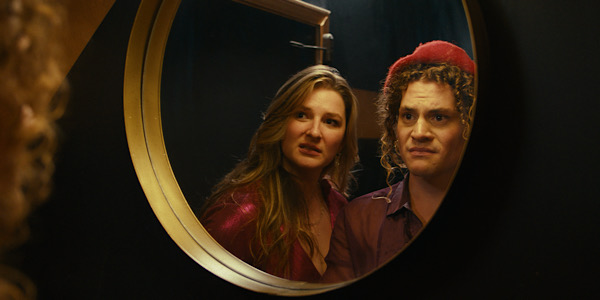
Zoe: We really don’t know each other at all. [Laughs] No—we met when we were 18 at students’ weekend at the theater school at DePaul. We became best pals and ended up living together while we were in school. When I first moved to LA, we were both deep in hustle culture and gig culture. We kind of landed, as another journalist put it, on the corners of the “desire economy.” I had a friend in New York who had used a website where people could bid to take you on a date. It was fascinating, kind of funny—and honestly, I needed the cash. So we both tapped into those experiences in different ways, and through our friendship and camaraderie, it felt really natural to bring that into a story and start playing in that space.

When did the idea really come up? And did you always see it as episodic?
Louis: It’s been a journey. Our first reading was late 2019, early 2020. We thought we’d be filming by spring, and then the world took a big turn. But that pause gave us space to really dive in. We worked with an incredible writing coach, Jessica Blank. She was a great mentor. Zoe and I went to college together, so we already shared a similar artistic language. Being best friends, we’re constantly talking over each other—that was already there. But with Jessica, we really developed our voice together as writers. Looking back, we’re grateful for that time. It became what it is today. We always saw it as episodic—as a TV series—but we explored other forms too. A short, a feature. Ultimately, we knew these were stories we had an insatiable desire to keep telling. They’re based on lived experiences, but highly fictionalized. There’s no ceiling. We got to map these characters across multiple seasons and see what they’re willing to risk, and what it costs them
Have you written beyond the pilot?
Zoe: What we shot is the pilot for the festival (it’s 15 minutes), but the full episode is 30. The idea for the first season is probably six to eight 30‑minute episodes. We have a deep outline for three seasons. The pilot is really a distillation—world‑building, who these friends are, their relationship, the pitter‑patter of the dialogue, and a snapshot of some of the daddies and the antics we get up to.
So it’s a proof of concept.
Zoe: Yeah, absolutely.
Have you found a home for it yet?
Louis: Not yet, but we’re in talks. We’ve had some really exciting meetings. No matter what happens, it’s been a moment to step back and go, “Wow—people are responding to this.” We’ve always seen it as a streamer, but we’re open to where it can land.
Obviously, it’s LA, but where did you film?
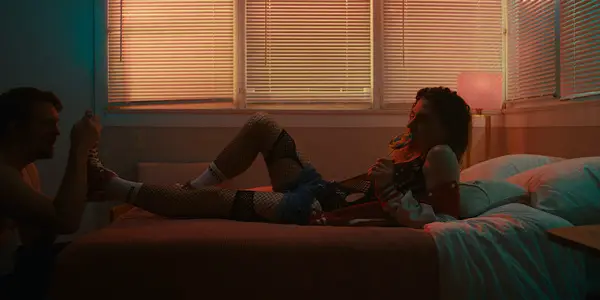
Louis: We’re East Side girls. We’re both in Echo Park, and we filmed mostly in Echo Park and Silver Lake. The restaurant scene was at Jewel LA, which sadly closed. They were incredibly generous—letting us shoot overnight really saved us. The bedroom set is actually my real bedroom.
And that painting behind you? [Points]
Zoe: A gigantic portrait of Judy Garland. A gift from me.
Louis: I’m a huge Judy Garland fan. There are probably ten to twelve images of her face in this room at any given angle.
Hidden Judys. Love it.
Louis: Exactly. Easter eggs.
The spaces feel so lived‑in.
Louis: They really are. We actually got a review that said that!
How much of the story is real?
Louis: A lot of the pilot is. The opening shot, me on the bed with the foot, was my actual first experience. Someone propositioned me on a dating app, and the conversation was almost identical. It feels outlandish, but it’s very specific and very real.
Zoe: When I first moved to LA, I lost my job at a juice bar and needed fast cash. I went on a date through one of those bidding sites. I wore a trench coat, trying to look professional, and ended up looking like a private investigator. When I arrived, he gave me a card with $200 inside that said, “I hope we click.” That tenderness—money paired with the hope of connection—felt really important to include.
Did you always plan to star in it yourselves?
Louis: Always. We wanted to create a vehicle that showcased us as performers. We’d been told the best way to stay attached was to make it undeniable.
Zoe: You have to write the role for yourself if you can’t find it.
What do you hope audiences walk away with?
Zoe: Joy. I want people to feel a little more excitement in their step, to step into a world that’s one tick off from reality. Something fun, escapist, but still grounded and human. And hopefully… a little spice.
Louis: Yeah, who wouldn’t want that? I also hope people walk out wanting more. And that they see joy and community in spaces that are often framed through trauma or disempowerment. There’s humor there. Friendship. And I think we really need that right now.
More joy and a little spice—I love it. Thank you so much for your time, and congratulations on Slamdance!
We want to thank Louie Rinaldi and Zoe Tyson for taking the time to speak with us.
Does content like this matter to you?
Become a Member and support film journalism. Unlock access to all of Film Inquiry`s great articles. Join a community of like-minded readers who are passionate about cinema - get access to our private members Network, give back to independent filmmakers, and more.