



This is a column about films by or about Palestinians. But why write about Palestinian film? Why devote the time, space, and energy to covering the cinematic productions of a country and occupied territory that has been largely ignored by cinema historians?
In terms of its cinema, the land and its people, it’s true, have not furnished the breakthrough technical or theoretical advances of the Russians, nor the philosophical and aesthetic revolutions of the French. They have not the massive, billion-dollar industry that Japan formed after the Second World War, nor do they have the impressive output and cultural saturation of the American, Indian, and, to a lesser extent, British film industries. Unlike other cinema countries, like South Korea, Greece, Hungary, Nigeria, Indonesia, Australia, and Mexico, there is no movement or wave of cinema yet recognized emerging from Palestine. And no Palestinian filmmakers have yet achieved the level of fame and recognition enjoyed by filmmakers of those aforementioned countries like Park Chan-wook, Bong Joon Ho, Yorgos Lanthimos, Joko Anwar, Alfonso Cuarón, or Guillermo del Toro.
My reasons for shining a spotlight on Palestinian cinema, however, do presuppose that the media produced in that country and by those people bears a certain unambiguous importance. The slaughter of civilians in Palestine, and in Gaza specifically, is the single most-recorded genocide in history. Every day, we are inundated with images, stories, and videos of the genocide of Palestinians and the ongoing health crises affecting that region. Few other countries have suffered the kind of barbaric, decades-long, internationally supported genocide that the state of Israel has committed against the people of Palestine. The fact that Palestinians, while suffering hundreds of casualties a year and while under constant threat from Israeli settlers and Israeli bombings, have persevered to produce cinema represents a degree of resilience and strength that I cannot possibly imagine.

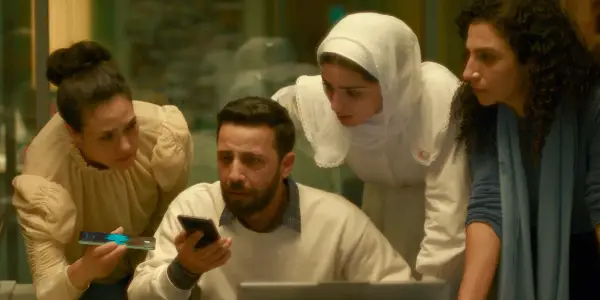
Palestinian film allows us to explore the concept of resistance through cinema. Particularly in the 1970s, the people of Palestine produced many documentaries that chronicle their deaths at the hands of Israel, forming a cohesive collection of political work, testimonies to the crimes of Israel, and documents of life in the country. Today, most of the cinema produced by the region is political documentaries capturing the immediate moment and intended to argue for a ceasefire, memorialize the dead, preserve the memory of Palestinian life, and bring some dignity to the besieged populace.
That is not to say that the cinema of Palestine matters only because it is produced by a people under siege. As Cinema Without Borders founder Bijan Tehrani wrote, “Palestinian cinema does not exist only to showcase victimhood. These films, as diverse as they are unified by a collective memory of loss and resistance, also depict joy, love, weddings, food, music, and the quiet resilience of people who refuse to disappear. The camera becomes both witness and weapon—a way of asserting presence in a world that has tried to erase them. These films say: we were here, we are here, and we will be remembered not just by the ashes of our homes, but by the stories we told.”
Filmmakers of Palestine, in choosing to make documentaries and fiction films about their experiences, are engaging in acts of resistance to Israeli aggression, but that is not the sole reason their work and art matters. Their art matters simply because it exists. But because Palestinian cinema occupies a precarious geopolitical footing — because the very existence of Palestine as a country is considered controversial by some — the films produced by and about Palestinians do not have as much global recognition as cinema from other countries.
Furthermore, the cinema of Palestine, I believe, complicates and outright rejects many of the preconceptions that many non-Palestinians have about the region, its people, and their experiences. Our collective imagination of the people of Palestine is shaped in large part by news coverage of that area and by shocking, disturbing images of starving children and bombed homes. In my experience of watching Palestinian cinema, these images are not untrue, but they do not represent the whole truth. Studying Palestinian cinema is a way to attempt to understand more fully the people of the region and their experiences, but it also facilitates understanding on their terms rather than on ours. Many American and British documentarians and TV crews have produced works about Palestine, but rarely have we seen films shot by Palestinians themselves. Studying Palestinian cinema is a way of returning the power of narrative control to the Palestinian people.
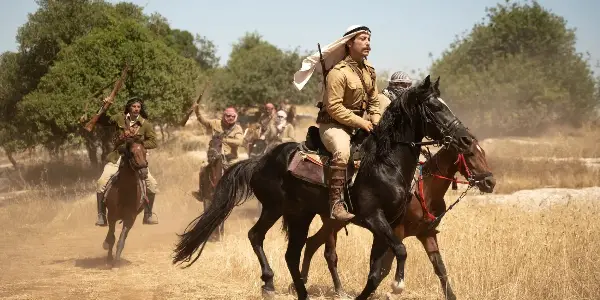
It must also be stated that the cinema produced by Palestine is not superior to any other country’s cinema, inasmuch as no country’s cinema is superior to that of another. I do not cover Palestinian cinema because I think that, for example, Ukrainian cinema or Mexican cinema or films about the Rohingya people are less deserving of study and praise. Instead, I want to cover Palestinian cinema because it is underrepresented in the world of film studies, because I believe the work is intellectually and philosophically interesting, because I believe the work and the people who make it matter artistically, because I want to see stories about Palestine told by the people of Palestine, and because I want to continue to learn more about the people and the nation of Palestine and the stories they have to tell.
In this column, I will focus every month on a new film that is either made by the people of Palestine or about the people of Palestine. Not all of these films will be made by Palestinians, and not all of these films will be shot in Palestine.
This column is made possible by the work of some truly groundbreaking scholars online, including the people who maintain the Palestine Cinema movie database and the Palestine Cinema Archive. There are so many films on these lists that I could produce this column every month for 12 years and still have films to write about, and that’s before even factoring in new films about Palestine that are yet to come. Lastly, in case I have any bad-faith readers out there, these writings are not intended to promote terrorism against the state of Israel.
I would not have started writing this column if it already existed in a better form elsewhere. As a white American living in Scotland, I know that I’m not any kind of authority on Palestinian life and politics. So if you’re reading this column and would like to share your perspectives on the work I cover, if you’re Palestinian and want to open a dialogue, or if you’re a bigot and want to tell me to fuck off, my email is listed below. This column is also available as a completely free Substack, which you can subscribe to here.
Contact me at clement@filminquiry.com
Does content like this matter to you?
Become a Member and support film journalism. Unlock access to all of Film Inquiry`s great articles. Join a community of like-minded readers who are passionate about cinema - get access to our private members Network, give back to independent filmmakers, and more.