



To understand why the sobriquet “La Lupa” (The She-Wolf) was bestowed upon Anna Magnani in her native Italy, you need look no further than her performance in Luchino Visconti’s 1951 melodrama Bellissima. A lesser-known gem in both its star and its director’s illustrious filmographies, Bellissima stars Magnani as a working-class mother determined to sacrifice anything and everything to get her young daughter a movie contract. The film, back in theaters in a new 4K restoration, is an ideal vehicle for Magnani’s forceful screen presence, in that you assume she’ll get what she wants by tearing it from the powers that be with her teeth. It’s also a searing glimpse at the pursuit of stardom at all costs, and the things you lose when you’re too focused on wanting more.
Make Me a Star
Maddalena (Magnani) is a nurse who travels all over Rome giving injections to patients, often with her daughter Maria (Tina Apicella) in tow. When the radio announces an open casting call for little girls to audition for a leading role in a new film directed by Alessandro Blasetti (playing himself), Maddalena rushes off to Cinecittà in the hope of securing an audition for Maria. Maria is small for her age, somewhat shy, and speaks with a lisp that occasionally verges into a stutter, but her poetry recitation is adorable enough to earn her passage to the next round.

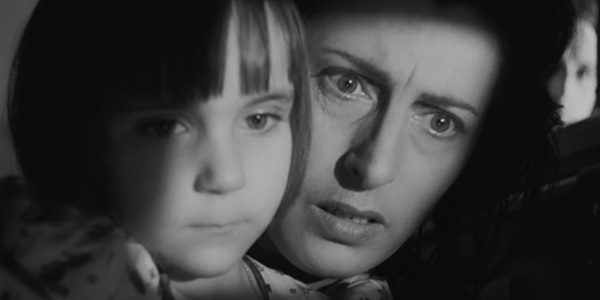
As Maddalena prepares Maria for the screen test she hopes will secure her daughter a brighter, more beautiful future, almost everything that could go wrong does. When Maddalena takes Maria for a professional photo, Maria bursts into tears. When she enlists Maria in ballet classes after hearing that the chosen girl will need to dance in the film, Maria spends the whole time clinging to the barre at the wall, her tiny legs not yet powerful enough for much else. And when she takes Maria for a haircut…well, that you have to see for yourself, because it’s one of the most hilarious bits in the film. Meanwhile, a shifty Cinecittà insider (Walter Chiari) offers to help get Maria closer to stardom; if only Maddalena could give him some money (to buy gifts for studio executives, he says) and perhaps some of herself, too.
Mother Magnani
The cast of Bellissima is a mix of professional actors and non-professionals; all bring vibrant energy to a film that starts in full swing, with Maddalena and other mothers rushing the Cinecittà gates, and never stops throughout its 115-minute running time. (And, in an enthusiastic embrace of Italian archetypes, everyone is talking loudly, over each other, and with their hands.) But Magnani never lets us forget that she is the star, giving an uproarious performance that makes you laugh, cry, and cringe, sometimes all simultaneously.
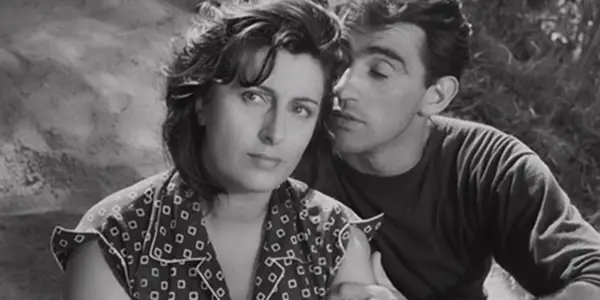
Watching Maddalena coerce Maria into a variety of unwelcome situations is incredibly difficult, not least because Magnani’s passionate embodiment of a would-be stage mother is all too painfully real. She is a mother who loves so much, with such force, that she may crush to pieces the thing she loves most. Because of this—this almost unbearable love—the film never loses compassion for Maddalena, even in her most unpleasant moments, and we never tire of watching Magnani bring her to life on screen (which is fortunate, as she’s in nearly every scene).
When Maddalena erupts during a fiery argument with her husband, Spartaco (Gastone Renzelli), she tells him that she is doing it all for Maria: so that Maria can grow up more comfortably than Maddalena did, with more money and opportunities, and without a husband who slaps her around when they disagree. Yet the more she insists it is only about Maria, the more we can see it is also about Maddalena: her desire to live vicariously through Maria (“I could have been an actress,” she says at one point while looking in the mirror) and feel as though she has done something wonderful with her life by making her daughter a movie star. Wouldn’t that be a much more impressive accomplishment than running around Rome, giving shot after shot just to get by? Wouldn’t that make her a great mother?
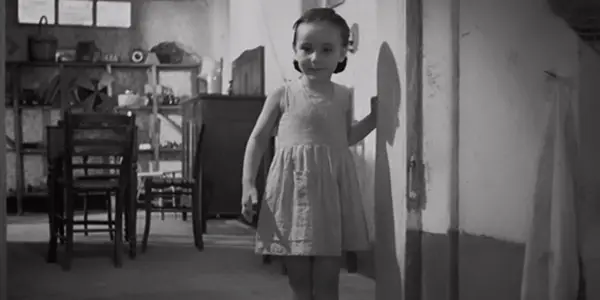
Naturally, Maddalena is enraptured by the escape from reality provided by the movies, especially those projected on a hanging screen in the courtyard of their apartment building. (It’s amusing to hear her speak highly of Burt Lancaster, the actor who Magnani would later star with in The Rose Tattoo, the film that won her a Best Actress Oscar.) But as she pulls back the curtain to see what really goes on inside the sprawling Cinecittà studio complex, she grows increasingly disillusioned. Throughout Bellissima, Visconti never lets us forget that what drives the vast majority of studio filmmaking (in Italy and elsewhere) is money, and making as much of it as quickly as possible at the expense of anything approaching ideals. It all builds to a heartbreaking moment in the film’s final act when Maddalena is abruptly jolted out of the fantasy she has been living in and exposed to the harsh reality of the filmmaking process for the first time. To create those magical images on the screen, a lot of real-world dirty work goes on behind the scenes, and more dreams are crushed than ever come true.
Conclusion
A captivating exploration of motherhood and moviemaking, Bellissima is also a prime example of what made Anna Magnani one of the most beloved and acclaimed actresses in world cinema.
The new 4K restoration of Bellissima opens at Film Forum in New York on May 1, 2026.
Does content like this matter to you?
Become a Member and support film journalism. Unlock access to all of Film Inquiry`s great articles. Join a community of like-minded readers who are passionate about cinema - get access to our private members Network, give back to independent filmmakers, and more.