



There’s no such thing as a “bad year for film.” But some years, it’s easier to find the gems than others. In our staff Top 10 picks last year, for example, besides a few blockbuster passion projects like Nosferatu and Furiosa: A Mad Max Saga, the picks across the board were incredibly diverse, ranging from international films to festival favorites to micro-budget word-of-mouth indies, showing that our critics had to work hard to find the great art amid a sea of mediocrity.
Some years, though, it feels like great art comes to us. 2025 was a year of easily accessible masterpieces. At movie theaters, audiences could see Paul Thomas Anderson’s gripping vision of an America tearing itself apart in One Battle After Another or Ryan Coogler‘s virtuosic and admirably messy Southern Gothic vampire musical Sinners. More low-key joys could be found in Yorgos Lanthimos’ new bizarro “comedy,” Bugonia, or Steven Soderbergh’s pair of stylish thrillers, Black Bag and Presence. Even the biggest films of the summer, like Superman and Weapons, regularly appear in our critics’ top 10s this year.
At home, great cinema was easy to find, too. Netflix put up major money for the latest Benoit Blanc caper, Wake Up Dead Man, which many of our critics adored, and similarly footed the bill for Guillermo del Toro’s massive and ambitious Frankenstein adaptation, the streamer’s second jaw-dropping collaboration with the monster-loving auteur. Mubi also continued its arthouse dominance, with releases like No Other Choice, The Secret Agent, Sentimental Value, Die My Love, It Was Just an Accident, and The Mastermind each being celebrated by our team.
We asked our critics what their favorite films of the year were. Due to the unknowable nature of international film releases, some of our European critics might include titles that Americans got back in 2024, but that’s showbiz for you. So without further ado, here are our critics’ top 10 favorite films of 2025.
Faisal Al-Jadir

- The Voice of Hind Rajab (Kaouther Ben Hania)
- It Was Just an Accident (Jafar Panahi)
- Blue Moon (Richard Linklater)
- Nosferatu (Robert Eggers)
- Interloper (Nabil Chowdhary)
- Frankenstein (Guillermo del Toro)
- Sink (Zain Duraie)
- Sinners (Ryan Coogler)
- No Other Choice (Park Chan-wook)
- Palestine 36 (Annemarie Jacir)
Honorable Mentions:
Train Dreams (Clint Bentley)
Presence (Steven Soderbergh)
The Ugly Stepsister (Emilie Blichfeldt)
Dust Bunny (Bryan Fuller)
Hedda (Nia DaCosta)
Timeless and timely, Annemarie Jacir’s stunningly shot historical epic Palestine 36 weaves together numerous narrative strands with a diverse cast of characters. With great emphasis on Palestinian identity and voices, the film sees its protagonists valiantly battle colonial erasure and Zionist occupation.
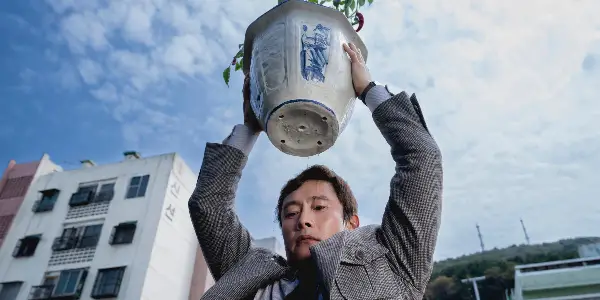
Park Chan-wook’s No Other Choice is a darkly comic and innovatively photographed takedown of corporate politics, featuring a nuanced performance from Lee Byung-hun.
With two great performances from Michael B. Jordan, Sinners is a gritty folk horror film that infuses the blues with gangland mythology and vampiric shenanigans. Ryan Coogler’s magnum opus made legends out of the voiceless.
Sink, Zain Duraie’s debut feature, is a brilliantly realized Jordanian drama that examines a mother’s (at times misguided) devotion to her disturbed son. Powerfully acted by Clara Khoury and Mohammad Nizar, Sink urges us to empathize with those shunned by an indifferent society.
Guillermo del Toro’s lifetime achievement, Frankenstein, excels in every single department, exploring the tragic conflict between an obsessive anti-hero and his imperfect yet romantic creation.
Nabil Chowdhary’s debut feature, Interloper, is a smart Australian psychological thriller featuring an outstanding lead performance from Brenna Cockrem, indelible photography and a haunting score. Carefully written, Interloper explores the thin line between being a human and a monster.
Robert Eggers’ hypnotic Nosferatu boasts ambitious visual language, while Ethan Hawke was the highlight of Richard Linklater’s Blue Moon. Maestro Jafar Panahi, defiant as ever, gifted us the politically charged (and secretly filmed) It Was Just An Accident.
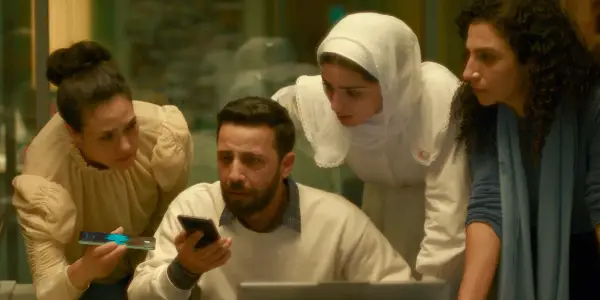
Finally, The Voice of Hind Rajab blurred the line between art and reality. Kaouther Ben Hania’s tightly directed docudrama utilizes a single location and a great cast to shine a light on the Palestinian children, civilians, and frontline workers murdered by Israeli forces as they casually commit genocide in Gaza. A call to action? The most important one yet. –Faisal Al-Jadir
Stephanie Archer
- Die My Love (Lynne Ramsay)
- Bugonia (Yorgos Lanthimos)
- One Battle After Another (Paul Thomas Anderson)
- Weapons (Zach Cregger)
- Frankenstein (Guillermo del Toro)
- 28 Years Later (Danny Boyle)
- Final Destination: Bloodlines (Zach Lipovsky and Adam B. Stein)
- Wake Up Dead Man: A Knives Out Mystery (Rian Johnson)
- Heart Eyes (Josh Ruben)
- Sinners (Ryan Coogler)
2025 will remain in my mind the year of horror. With each release, 2025 became more than Oscar beauties and blockbuster winners. From reboots to folklore to the supernatural, every facet of the horror genre proved there are still stories waiting to be told. However, it was the horror saturated in reality that became the most terrifying — and one of the best films of the year.
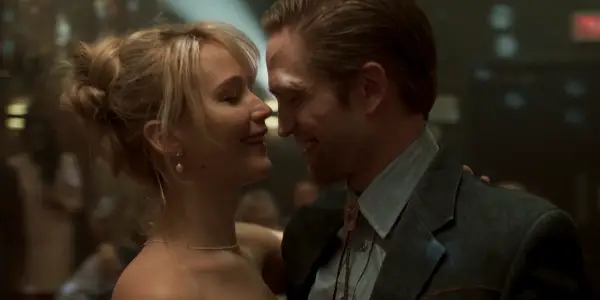
As I watch awards season begin to gain steam, I find myself surprised that Die My Love has not ranked higher on the awards circuit. It is a mind-bending examination of postpartum depression and all its facets, throwing viewers into an intense collapse of the mind with an unreliable narrator at its core. Led by a dynamic and heartbreaking performance from Jennifer Lawrence, the film leaves you constantly off-kilter, questioning what is reality and what is the creation of Grace’s growing psychosis. And even when you are able to identify reality, there is a constant struggle for sanity. Jennifer Lawrence is hypnotizing, her growing, agonizing isolation and entrapment of the mind driving the success of the film. She is its beating heart, pulsating with intensity that threatens to consume the viewer as much as herself. There is a raw beauty and terrifying honesty in her performance that resonates to the core.
Die My Love, though, not only finds success in its story and lead performance, but in its supporting cast as well. While postpartum depression is in the forefront, depression is a constant thread throughout its fibers. Depression not only consumes Grace but surrounds her as well, further creating an isolation she cannot escape. The film expands its examination of depression in Grace’s husband Jackson and mother-in-law Pam, each grappling with their own mental health. Everyone is finding ways to manage their depression, healthy or not, heightening the consuming nature of Grace’s, solidifying how ill equipped they truly are able to help her. Robert Pattinson delivers his own layer of depression, saturated in Jackson’s inability to help Grace and his own idea of family crashing into reality, all while Sissy Spacek harnesses the duality of recognition and paralysis. She sees Grace slipping further and further away but is unable to reach her, held in place by her own grief-stricken depression.
With its surrealist craftsmanship pulsating true emotion, performance and skill while escalating with every scene, Die My Love will leave its viewers holding their breath — and the pieces of their broken hearts. –Stephanie Archer
Bailey Jo Josie
- Frankenstein (Guillermo del Toro)
- Superman (James Gunn)
- BLKNWS: Terms & Conditions (Kahlil Joseph)
- Thunderbolts* (Jake Schreier)
- Sinners (Ryan Coogler)
- Eddington (Ari Aster)
- Zootopia 2 (Jared Bush and Byron Howard)
- Mickey 17 (Bong Joon Ho)
- 28 Years Later (Danny Boyle)
- The Fantastic 4: First Steps (Matt Shakman)
Honorable mentions:
The Perfect Neighbor (Geeta Gandbhir)
John Candy: I Like Me (Colin Hanks)
Freakier Friday (Nisha Ganatra)
I was super excited this year that I was able to not only watch well over 200 films within 365 days but also find some favorite films in the most unexpected places.
After attending SIFF this year, I became obsessed with Kahlil Joseph’s BLKNWS: Terms & Conditions, which is one of the most unique films I have ever seen and, as I had written, one of the best cinematic destructions of Western film formulas of this century. A must-see.
Initially I had no interest in seeing any zombie movies (let alone 28 Years Later) this year, but I was shaken by the beauty of it toward the end and by young Alfie’s love for his mother, which turned it into a surprise favorite.
Another surprise for me this year was Superman. Ask anyone who’s known my opinions on comic book characters over the last three decades, and they would expect me to hate on this James Gunn film (which was also a major possibility, as Gunn‘s style of filmmaking is sometimes extremely grating to me), but I ended up loving it more than most films this year. I loved David Corenswet as Supes, I loved Krypto, and I loved the power of journalism helping to save the day.
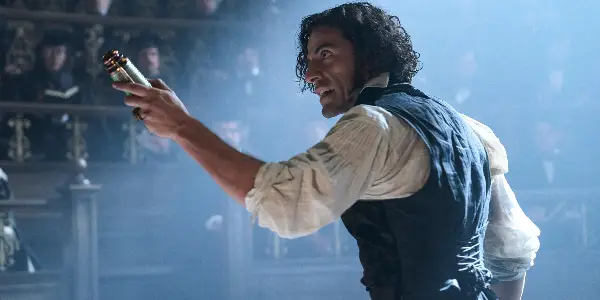
However, it didn’t take long for the happy summer fun to be dethroned by the Gothic winter journey that came with Guillermo del Toro’s Frankenstein. A horror movie fanatic, I knew that I would adore the movie, but I did not know how much I would be blown away by Jacob Elordi’s physicality and heartbreaking delivery as the Creature, Oscar Issac’s seething narcissism as Victor, and Mia Goth’s resolute gentleness as Elizabeth. For me, “Frankenstein” was the best movie of the year, though there were so many that I will cherish forever. –Bailey Jo Josie
Lee Jutton
- Marty Supreme (Josh Safdie)
- Black Bag (Steven Soderbergh)
- Sound of Falling (Mascha Schilinski)
- Sentimental Value (Joachim Trier)
- Put Your Soul on Your Hand and Walk (Sepideh Farsi)
- Sinners (Ryan Coogler)
- One Battle After Another (Paul Thomas Anderson)
- Souleymane’s Story (Boris Lojkine)
- The Secret Agent (Kleber Mendonça Filho)
- No Other Choice (Park Chan-wook)
Honorable mentions:
Bugonia (Yorgos Lanthimos)
K-Pop Demon Hunters (Chris Appelhans and Maggie Kang)
Mirrors No. 3 (Christian Petzold)
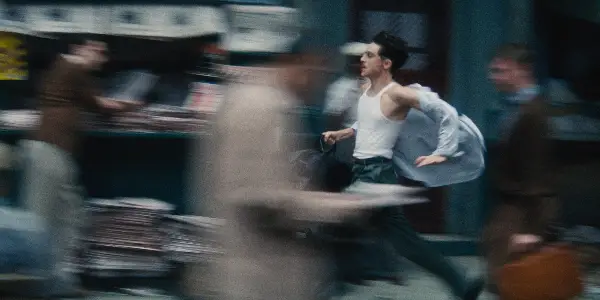
Director Josh Safdie and co-writer Ronald Bronstein have done it again, and by “it” I mean crafted a masterpiece of chaos cinema focused on the manic strivings of a character so weirdly specific that they instantly feel all too real. In this case, that character is Marty Mauser, an ambitious Jewish kid working in his uncle’s shoe store in 1950s New York who will do anything and everything possible to become the greatest table tennis player in the world, including using everyone else in his life as rungs on his rickety stepladder to the top.
Such an outsized character, like Howard Ratner in Uncut Gems and Connie Nikas in Good Time, needs to be played by an actor with massive movie star charisma if he’s going to win the audience over and make them root for him instead of wanting to punch him in the face; fortunately, like Adam Sandler and Robert Pattinson before him, Timothée Chalamet is absolutely that guy. His Marty, loosely based on real-life table tennis champion Marty Reisman, is admirable in his undeniable chutzpah, even as he commits one catastrophic error after another in his quest to become the best.
It’s a quest that unfolds at a frantic pace, filled with screwball antics, overlapping dialogue, and a top-notch supporting cast that includes Gwyneth Paltrow as a washed-up movie star looking for her big comeback, Kevin O’Leary as her ruthless businessman husband, and Tyler, The Creator as a taxi driver roped into being Marty’s reluctant partner in crime. (Shout out to casting director Jennifer Venditti, whose ability to assemble phenomenal casts makes her the unsung hero of any film directed by one or both Safdie brothers.) In a year chock full of entertaining hot mess representation on screen, Marty does indeed reign supreme. –Lee Jutton
Payton McCarty-Simas
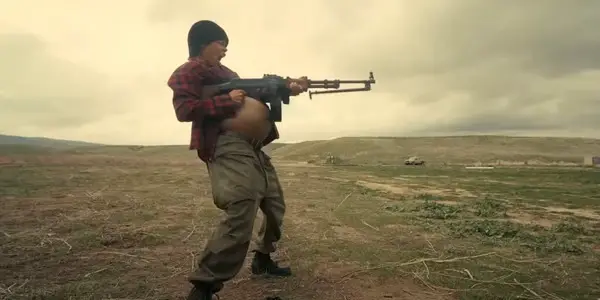
- One Battle After Another (Paul Thomas Anderson)
- Sinners (Ryan Coogler)
- The Secret Agent (Kleber Mendonça Filho)
- Sorry, Baby (Eva Victor)
- Peter Hujar’s Day (Ira Sachs)
- Marty Supreme (Josh Safdie)
- Invention (Courtney Stephens)
- 28 Years Later (Danny Boyle)
- Resurrection (Bi Gan)
- The Ugly Stepsister (Emilie Blichfeldt)
Honorable mentions (in alphabetical order):
Eephus (Carson Lund)
Final Destination: Bloodlines (Zach Lipovsky and Adam B. Stein)
Fucktoys (Annapurna Sriram)
Sirāt (Oliver Laxe)
In a year that made feeling optimistic about the business of film feel like a tall order, many of the best films led with hope. The films I’ve chosen are big in their ambitions no matter their scale, from era-spanning tentpoles to delicate portraits of lives well lived, these movies were enervating, vibrant, and viscerally live-wire. Overall, the films on this list left me feeling better coming out of the theater than I thought possible given the darkness of our times and the fragmentation of our industry. –Payton McCarty-Simas
Mark McPherson
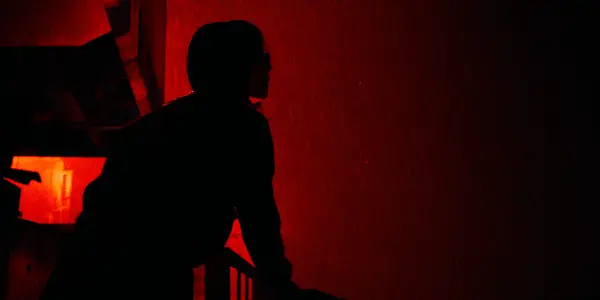
- Resurrection (Bi Gan)
- The Secret Agent (Kleber Mendonça Filho)
- One Battle After Another (Paul Thomas Anderson)
- Sinners (Ryan Coogler)
- Frankenstein (Guillermo del Toro)
- Marty Supreme (Josh Safdie)
- Sentimental Value (Joachim Trier)
- If I Had Legs I’d Kick You (Mary Bronstein)
- It Was Just an Accident (Jafar Panahi)
- The Long Walk (Francis Lawrence)
While I was composing my list, I noticed a common theme was anxiety and doubt, finding the shock most relatable in these rough times. Thankfully, I would see Bi Gan‘s ambitious and artistic Resurrection as the year closed and was reminded that movies can still be transcendent experiences that lift you from your body. Films like that make life worth living amid all the chaos. –Mark McPherson
Tej Narayanan
- No Other Choice (Park Chan-wook)
- Hamnet (Chloé Zhao)
- Rental Family (Hikari)
- Marty Supreme (Josh Safdie)
- Train Dreams (Clint Bentley)
- Sinners (Ryan Coogler)
- Bugonia (Yorgos Lanthimos)
- One Battle After Another (Paul Thomas Anderson)
- Superman (James Gunn)
- It Was Just an Accident (Jafar Panahi)
Honorable Mentions:
Sentimental Value (Joachim Trier)
Eddington (Ari Aster)
Is This Thing On? (Bradley Cooper)
Blue Moon (Richard Linklater)
What distinguishes the films of 2025 is how clearly they depart from earlier eras that framed humanity as fundamentally doomed. In the early 2020s, reflecting the world’s political instability or technological anxiety, movies leaned hard into cynicism. The end of the world was rarely accidental; it functioned as a moral verdict. Humans were depicted as selfish, shortsighted, and beyond redemption, and apocalyptic conclusions felt less tragic than inevitable.
In those stories, hope was often treated as misguided. Characters who believed in cooperation or compassion were punished by the narrative, while survival favored the ruthless and emotionally detached. Even when humanity endured, it did so without much dignity. Progress was minimal, growth nonexistent. The message was blunt: People were the problem, and extinction was simply the logical outcome of their behavior.
The major films of 2025 take a different approach. They still portray a harsh, damaged world filled with broken systems and personal loss, but they refuse to equate imperfection with worthlessness. Rather than questioning whether humanity deserves to survive, these films largely take that as a given. Their focus shifts to how survival can carry meaning, even when conditions remain bleak.
This change suggests a broader tonal recalibration in contemporary cinema. Instead of condemning humanity for its failures, these movies acknowledge them while still extending empathy. Human struggle is no longer mocked or dismissed; it is treated as something fragile, difficult, and ultimately worth valuing. –Tej Narayanan
Clement Tyler Obropta
- Gaza: How to Survive a War Zone (Jamie Roberts)
- Wake Up Dead Man: A Knives Out Mystery (Rian Johnson)
- The Golden Spurtle (Constantine Costi)
- One Battle After Another (Paul Thomas Anderson)
- Once Upon a Time in Gaza (Tarzan and Arab Nasser)
- To Kill a War Machine (Hannan Majid and Richard York)
- Frankenstein (Guillermo del Toro)
- Sorry, Baby (Eva Victor)
- Eephus (Carson Lund)
- Eternity (David Frayne)
Honorable mention:
Lost in Starlight (Han Ji-won)
Every year, my list of new releases to see grows longer and longer. In 2025, I only managed to see about 10% of everything that’s out there that I want to see (66 films out of 660). And while there are many new blockbusters and arthouse films worth highlighting, I spent much time this year focusing on the cinema that comes out of Palestine, and the cinema that comes out in support of Palestine.
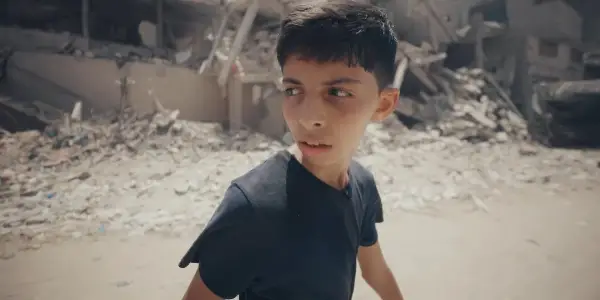
2023 and 2024 saw the highest fatality rate in Palestine, particularly the Gaza Strip, since 2014. And thanks to the tireless work of journalists, documentarians, and ordinary citizens with smartphones, Israel’s genocide against the Palestinian people is likely the most recorded and widely seen genocide in human history. Some of the year’s most exceptional films are brave works that look at Palestinian resistance, whether that’s Palestine Action occupying and sabotaging drone factories in the U.K. in To Kill a War Machine or children using social media to escape reality in Gaza: How to Survive a War Zone. But for Palestinians, or indeed any besieged people, the mere act of making art is resistance. “You can resist with weapons,” one character says in Once Upon a Time in Gaza, “but also with images.” I also liked the new Knives Out movie, because I like to have fun sometimes too. Sue me. –Clement Tyler Obropta
Linsey Satterthwaite

- Pillion (Harry Lighton)
- A Real Pain (Jesse Eisenberg)
- The Mastermind (Kelly Reichardt)
- The Ice Tower (Lucile Hadžihalilović)
- Bugonia (Yorgos Lanthimos)
- Sinners (Ryan Coogler)
- Wake Up Dead Man: A Knives Out Mystery (Rian Johnson)
- Weapons (Zach Cregger)
- One Battle After Another (Paul Thomas Anderson)
- Black Bag (Steven Soderbergh)
The biggest surprise of the year came from Harry Lighton, who knocked it out of the park with his directorial debut Pillion, a sexy and funny but unexpectedly sweet and tender “dom-com.” Starring Harry Melling and Alexander Skarsgård, the film shines a light on BDSM relationships within the queer biker community that is refreshing, non-judgmental and incredibly touching.
Carried by a magnificent performance by Melling, who has a face that I could happily watch for a hundred hours, we feel every inch of Colin’s longing, loneliness, excitement and happiness, all etched across his wholly expressive being. Skarsgård meanwhile wears his leathers like a second skin, and it easy to see why Colin becomes captivated by Ray — he is someone who should have never been in Colin’s orbit but who drops in like a Viking Adonis. Watching Skarsgård stalk round the back of Primark is as disorientating as when Scarlett Johansson walked the streets of Glasgow in Jonathan Glazer’s Under the Skin.
Lighton directs with an assurance but deftness of touch that is deeply affecting. The film has an undeniable British sensibility, like the best rom-com that Richard Curtis never would, or never could, have made. He takes us to a world seldom seen on screen but crystallizes all the moments that many of us will recognize and resonant with from more conventional romances, breaking down the boundaries and showing us that beneath the kinks, whips, and chains, we are not actually all that different.
Pillion soars on the open road. It is a film of bruising, achingly beautiful wonder. It captures that moment in time when you know something can’t last, that this time is fleeting but will change you forever. –Linsey Satterthwaite
Kristy Strouse

- Sentimental Value (Joachim Trier)
- One Battle After Another (Paul Thomas Anderson)
- Sinners (Ryan Coogler)
- Hamnet (Chloé Zhao)
- Black Bag (Steven Soderbergh)
- Rental Family (Hikari)
- Wake Up Dead Man: A Knives Out Mystery (Rian Johnson)
- Sorry, Baby (Eva Victor)
- Wicked: For Good (Jon M. Chu)
- Hedda (Nia DaCosta)
As I write this, there are a still a few films from 2025 that I have yet to see. However, I can confidently say that 2025 was such a chaotic and strange year that it’s not surprising that my film picks would follow suit. While at face value, they nearly have nothing in common, they are each creatively wise. I think there was a lot of beauty in 2025, even if it came with a bit of heartache.
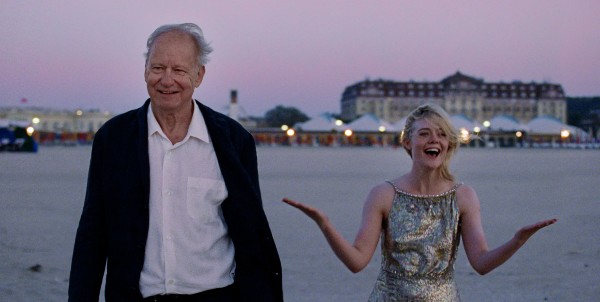
As a longtime fan of Joachim Trier I wasn’t surprised that I fell in love with Sentimental Value. It’s another soulful exhibit of the wear and tear we put on these human threads and how our decisions can echo through our families. It was a standout to me, and I truly hope this is Stellan Skarsgård’s year. Hamnet is another that’s full of brilliant performances and is achingly profound. One Battle After Another is basically my dream collaboration coming to wonderful fruition, and Sinners is a beautiful and horrific symphony that I can’t get enough of.
All of these films have settled into their own little corners of my psyche, and I’m cheering for every one of them. And especially for Eva Victor, who floored me earlier this year with Sorry, Baby and hasn’t left my mind since.
I love new and unique voices as well as reliably compelling filmmaking (such as Steven Soderbergh, whose Black Bag was severely underrated). This is what makes movies great. May 2026 be another year of stellar exploration and incredible discoveries. –Kristy Strouse, Editor in Chief
Jake Tropila

- Resurrection (Bi Gan)
- One Battle After Another (Paul Thomas Anderson)
- Cloud (Kiyoshi Kurosawa)
- The Shrouds (David Cronenberg)
- Chainsaw Man – The Movie: Reze Arc (Tatsuya Yoshihara)
- Marty Supreme (Josh Safdie)
- Broken Rage (Takeshi Kitano)
- The Phoenician Scheme (Wes Anderson)
- Caught by the Tides (Jia Zhangke)
- The Mastermind (Kelly Reichardt)
Honorable mentions (in alphabetical order):
28 Years Later (Danny Boyle)
100 Meters (Kenji Iwaisawa)
Afternoons of Solitude (Albert Serra)
Eephus (Carson Lund)
Friendship (Andrew DeYoung)
Highest 2 Lowest (Spike Lee)
If I Had Legs I’d Kick You (Mary Bronstein)
No Other Choice (Park Chan-wook)
Reflection in a Dead Diamond (Hélène Cattet and Bruno Forzani)
The Ugly Stepsister (Emilie Blichfeldt)
Wake Up Dead Man: A Knives Out Mystery (Rian Johnson)
Perhaps the single most defining moment of 2025 was the sudden and tragic passing of David Lynch, leaving behind an unassailable body of work and a film community unequivocally shaken by his loss. His work was frequently characterized by surreal and dreamlike imagery, often encouraging viewers to make heads and tails of what they are seeing through not through logic, but through intuition. There truly never will be another artist like Lynch, but there will be those that keep his spirit alive, and no 2025 film better represented this ethos than Bi Gan’s Resurrection. The director’s fourth feature film dives headfirst into the world of the dream, where mankind has abandoned their need for the REM cycle in exchange for prolonging their lives. However, one individual, marked as a “Deliriant” (played by Jackson Yee), still persists to dream, resulting in persecution by “The Other Ones” (headed up by Shu Qi), who have marked this cosmic interloper for termination.
What follows is an oneiric odyssey as told through the history of cinema, with Resurrection broken up into five discrete sections, each one capturing one of the five senses and realized through various film styles, from silent film to film noir to a contemporary romance about vampires. Each segment is formally dazzling, with the final one shot in a 40-minute oner that reaffirms Bi as one of our greatest living filmmakers. This author is particularly allergic to films that espouse a “movies are actually magic” theme, but in the case of Bi Gan’s latest, they transcend the pitfalls of that genre to turn into something extraordinary. David Lynch would be proud. –Jake Tropila
Tynan Yanaga

- Little Amélie or The Character of Rain (Maïlys Vallade and Liane-Cho Han Jin Kuang)
- Sentimental Value (Joachim Trier)
- A Little Prayer (Angus MacLachlan)
- It Was Just an Accident (Jafar Panahi)
- My Mom Jayne (Mariska Hargitay)
- Souleymane’s Story (Boris Lojkine)
- The Secret Agent (Kleber Mendonça Filho)
- Sinners (Ryan Coogler)
- Rental Family (Hikari)
- Familiar Touch (Sarah Friedland)
I find myself not simply craving good movies well-made, but movies that rhyme and reverberate with the humanity in my own life. There is no objective science to end-of-the-year lists, and so our personal fascinations and affinities must play a part. In this way, Little Amelie speaks to me by recounting a coming-of-age story of a young Belgian toddler growing up in bucolic Japan of the late ’60s.
By blending a Wonder Years-like sensibility with delightful inflections of European and anime influence, it threads the paradox of being familiar and still unique. It makes me wax nostalgic about my favorite aspects of Japanese culture, even as I continue to reflect on the most impactful memories forming a young mind.
This little girl’s life is expressed through glorious visions of animation cycling through time and space, capturing the universal essence of nascent childhood with wide-eyed wonderment. The world is so much grander than our finite faculties can grasp, and it touches on the sublime of the everyday, constantly living in tension with heartbreak.
We come into the world acting like we are the center of the universe and then learn soon enough we are not; this is a good thing. There are brothers and sisters, parents and grandparents, and in Amelie’s case, her Japanese caregiver, Nishio-san, who becomes a boon companion. I could see it playing as an international companion piece and double feature with Richard Linklater’s Apollo 10 ½. –Tynan Yanaga
Film Inquiry’s Top 10 Movies of 2025
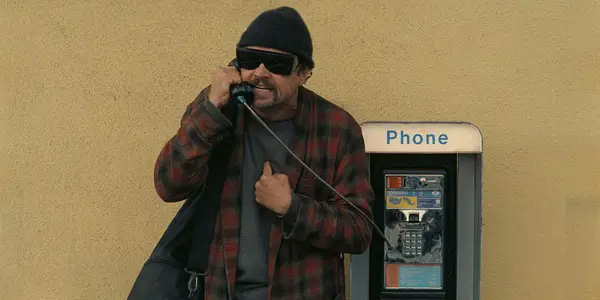
1. One Battle After Another (Paul Thomas Anderson) — 60 points
2. Sinners (Ryan Coogler) — 52 points
3. Marty Supreme (Josh Safdie) — 32 points
4. Frankenstein (Guillermo del Toro) — 31 points
5. Sentimental Value (Joachim Trier) — 30 points
6. The Secret Agent (Kleber Mendonça Filho) — 23 points
7. Resurrection (Bi Gan) — 22 points
8. Wake Up Dead Man: A Knives Out Mystery (Rian Johnson) — 20 points
10. TIE: Bugonia (Yorgos Lanthimos) and It Was Just an Accident (Jafar Panahi) — 19 points
After hearing from 12 critics praising 64 different films from this past year, we ran the numbers and averaged out the scores. We assigned scores based on ranking, so a No. 1 pick would get 10 points, a No. 2 pick 9 points, et cetera. No points for honorable mentions.
The results tell us the 10 movies that we can all mostly agree on — the ones that the most Film Inquiry critics loved, the ones that mean something to us. We hope you had a great 2025, and best of luck catching up on whatever great films you missed. And remember — time doesn’t exist, yet it controls us anyway.
Does content like this matter to you?
Become a Member and support film journalism. Unlock access to all of Film Inquiry`s great articles. Join a community of like-minded readers who are passionate about cinema - get access to our private members Network, give back to independent filmmakers, and more.