



If you haven’t met Emily Robinson, you should. Joyous and full of determination, she’s a new female voice behind and in front of the screen that deserves to be embraced. With her debut feature film Ûgly Cry, Robinson has not only showcased the depth of her talent, but also dived into the layered themes of self-perception and societal pressures. Prior to SXSW, I had the pleasure of sitting down with Robinson to discuss her journey, the creation of her film, and the profound themes it explores.
The Genesis of a Story
Robinson‘s journey began with a simple yet resonating idea. “I’ve been thinking a lot about plastic surgery and the pressures to get it,” she shared. “I really wanted to make a movie that felt contained and honest. It originally started where I was going to film it in my apartment alone, but then I realized I would lose my mind if I did that.”
The path from concept to creation was organic. Robinson recounted the early days of filming: “I did film a few scenes that were improvised, just an outline, me, a camera, and some friends, including Ryan Simpkins. Once there was actually a script and a budget, Ryan still played Maya, which was wonderful.” The journey was filled with challenges, but she was determined to see the story and her character through, “I felt really nice to have the ability to look at the arc and make sure that Delaney was getting pushed as much as she should”
A Personal Touch
One of the most compelling aspects of Robinson‘s film is her personal involvement and the many hats she wore. “At first, it kind of happened by default because I was available to film things with myself. As the script developed, it felt like it only contributed to the meta nature of it.” Her long-standing relationship with her co-star added another layer. “We’ve auditioned for the same things, acted together, and been in this industry for a while. I tried to pull people I know from working in film for over 20 years to make this feel full of life.”
Her experiences in the entertainment industry have greatly influenced her work, and she used what she knew. “I remember turning 23 and hearing friends say they were told they looked too old for a role. It was shocking. I’m not trying to moralize Botox or plastic surgery, but I want to start a conversation about the pressure we put on women to conform to beauty standards”. She further elaborated, “There is this desire for us to all kind of have the same face and become the same person, which is a bit sad.”
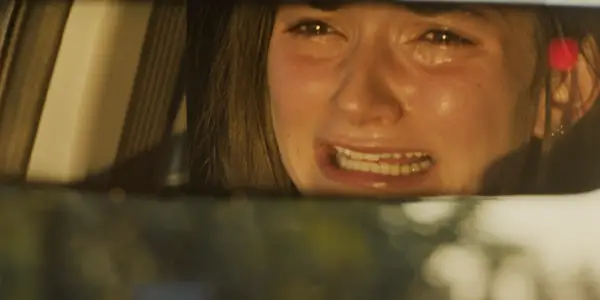
When asked if she had her own “Ugly Cry” experience, she replied: “I’ve never been given feedback from a casting director that I have an ugly cry and that is a bad thing. However, I have been told that I have an ugly cry. And I have been very proud of it.” She delved deeper. “Recently, after I posted announcing the film, an old acting teacher reached out to me to tell me that they had a client who once was told that they didn’t get a role because they had an ugly cry.”
And as she states, “It made me very sad because yeah, cries should be ugly. You should not be thinking about, as an actor, how you may look crying.”
Cry that ugly cry!
Ugly Cry’s Themes
The film delves deep into the pressures of societal beauty standards and self-perception. This has been not only a theme in many movies, but a big part of female life, proving now as relevant as ever. Robinson explained, “I’m not trying to moralize Botox or plastic surgery or any of that with this film, but I am trying to start a conversation about the pressure that we put on largely women to modify themselves to conform to beauty standards and to fit in with this industry.” She added, “It’s interesting because I think that there are a few threads. There are threads for different people. I think that perhaps the most important one that I hope young people watching the film maybe feel is sort of the thread connected to young Delaney.”

The film also addresses the competitive nature of the industry and the importance of community. “A big thread is Delaney with her friend Maya and they get competitive. Really seeing that and using that as an example of what not to do, I think, and allowing ourselves to rely upon our creative community and lift each other up rather than succumbing to jealousy.” Something, we love to see.
A Message for Aspiring Filmmakers + Looking Ahead
As someone who inspired me during our convo, I had to ask her to extend some advice for those looking to make their mark in the industry. “It’s so hard. You have to knock on every door and ask everyone. It can feel like it’s going to take forever, but use the time if you can. Don’t rush it.” She emphasized the importance of patience and perseverance: “I felt I was ready to make my first feature for a long time. And I am so glad it took me as long as it did, because I think that the time allowed me to really strengthen the script and find the people who were going to help elevate it and make it what it should be.”
As Robinson prepared for the premiere of her film at South by Southwest, her excitement is palpable. “It’s my first South by. I’m so excited. It’s been strange planning an after-party in a city I’ve never been to, but I can’t wait.” She laughs, never imaging herself in that position. But, her hope for the film is clear and her enthusiasm, palpable. “I want young people to feel the thread connected to young Delaney. She’s losing herself to this spiral, and it’s a reminder to preserve your energy and who you are.”
Emily Robinson‘s debut feature is not only a successful first entry, but it’s heartfelt and yet horrifying, as we watch this exploration of identity, societal pressures, and the journey to self-acceptance. We know her struggle and yet we don’t. It’s that perfect relatable but unique perspective. As audiences prepare to experience her work, one thing is certain: her voice is heard and I can’t wait to see what else she has to say.
We want to thank Emily Robinson for taking the time to speak with us. Check out her film, now playing at SXSW!
Does content like this matter to you?
Become a Member and support film journalism. Unlock access to all of Film Inquiry`s great articles. Join a community of like-minded readers who are passionate about cinema - get access to our private members Network, give back to independent filmmakers, and more.