



The sophomore feature from Japanese writer-director Chie Hayakawa (Plan 75), Renoir channels the filmmaker’s own experiences with childhood grief into a poignant tale of one young girl’s attempts to come to terms with her father’s impending death from cancer. While the subject matter may sound bleak, Renoir is suffused with such empathy and understanding—particularly for the imperfect ways in which we deal with life’s most difficult moments, and the regret that inevitably follows—that it’s impossible to come away from the film without a sense of hope.
Life and Death
In suburban Tokyo during the summer of 1987, eleven-year-old Fuki (newcomer Yui Suzuki) is preoccupied with death. When we first meet her, she is reading an essay out loud to her class that describes a disturbing dream she had about being murdered and how her peers reacted in the aftermath; later, her teacher tells her mother, Utako (Hikari Yoshida), that Fuki wrote another essay called “I’d Like to Be an Orphan.” (Utako’s hilariously blunt response to Fuki: “Don’t you dare kill me.”)


Fuki’s morbid mindset stems from her father, Keiji (Lily Franky), being in the final stages of terminal cancer; he has moved into a hospital, where he spends his remaining days scouring medical journals for treatment ideas that his doctors haven’t yet tried in a last-ditch attempt to remain alive. Utako, who has taken on extra responsibilities at work to afford Keiji’s care, is so overwhelmed by the inevitable that she doesn’t have much time to spend with Fuki, who ends up seeking solace in her own vivid imagination.
Fuki needs to be seen by someone, anyone, who might understand what she’s going through, especially since she doesn’t quite understand it herself. From practicing hypnotism and trying to awaken psychic powers to calling a phone chat line to listen to messages from other lonely people in need of companionship, Fuki’s quest for connection leads her to several adults who are also struggling in their solitude. These include a young widow plagued with guilt over her final argument with her late husband, a rich housewife whose life appears perfect but contains darkness beneath the surface, and a university student whose phone conversations with Fuki are driven by a disturbing desire that Fuki is too young and innocent to comprehend.
Alone, Together
Renoir is a captivating portrait of people trapped in private worlds of their own grief, unable to find the words to convey how they truly feel. There is a bittersweet irony in the fact that the one moment when Fuki is capable of addressing her tragic family situation out loud is with her English instructor; it’s as though speaking in a language that is not her own adds an element of emotional remove that makes it easier for her to articulate what has happened. Meanwhile, when Utako’s anxiety leads her to lash out at work, her supervisor sends her to a training for people with “communication difficulties,” where she channels her own loneliness into a hapless, hopeless infatuation with her married instructor. Nothing can come of it; it’s merely a placebo that she is pretending can numb the pain.
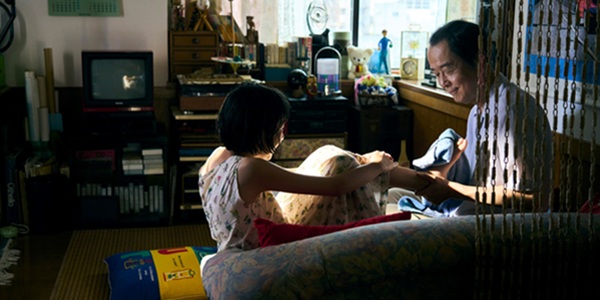
One of the reasons Hayakawa set Renoir in 1987 is that is when she was Fuki’s age, experiencing similar things, including but not limited to a fascination with Jean-Auguste Renoir’s painting “Little Irene.” But the film’s setting in the pre-Internet era also reminds us of the different ways people sought escape from isolation before social media. Does social media really make us any less lonely? Perhaps only superficially so—it gives us the illusion of real-life relationships without the substance—but it does enable easier connection with strangers who may be experiencing the same things we are. It also helps us more easily keep in touch with people who leave; when a close friend of Fuki’s announces that she is moving away, the knowledge that Fuki may never see her again is just another form of grief for her to wrestle with.
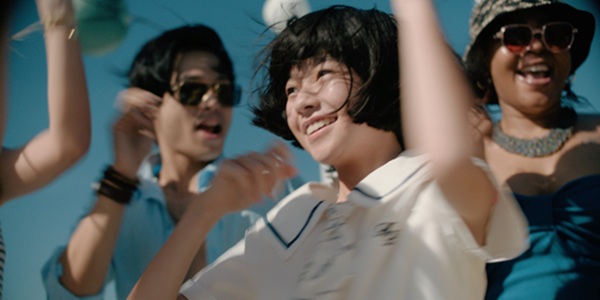
Suzuki gives a remarkable, relatable performance as Fuki; even if you were fortunate enough to get through childhood without facing the same tragedies she does, you will no doubt see elements of your own youth in her incorrigible curiosity and the imaginative ways she tries to cope with it all. (Again, this is especially true if you grew up before the proliferation of the Internet and were forced to find different distractions from reality.) Yoshida and Franky are also excellent as Fuki’s parents, whom Hayakawa shows us through Fuki’s eyes as well as our own; we see how their actions are mysterious and incomprehensible to a child but much more sympathetic to another adult. This is a rare, wise perspective for a film to take, and one that cannot fail to move you.
Conclusion
Renoir is a lovely, melancholy glimpse at one formative summer in the life of a young girl, anchored by Suzuki’s wonderful performance and Hayakawa’s sensitive storytelling.
Renoir opens in theaters in the United States on May 29, 2026.

Does content like this matter to you?
Become a Member and support film journalism. Unlock access to all of Film Inquiry`s great articles. Join a community of like-minded readers who are passionate about cinema - get access to our private members Network, give back to independent filmmakers, and more.