



France and Belgium and honestly most of Europe is so much more compassionate and advanced in public services and social programs than the United States that the films of the Dardenne Brothers to an American may seem like a fantasy world of people always willing to give a hand, something totally alien to one of the most isolated and selfish societies on Earth in America. Over the century, the Dardenne Brothers’ films have expanded from being stories of their native Belgium depicting wayward youth stuck in the “facts of life” to incorporating a litany of social issues beyond economics, from religion, to sexuality, immigration, and most recently with Young Mothers, public family assistance.

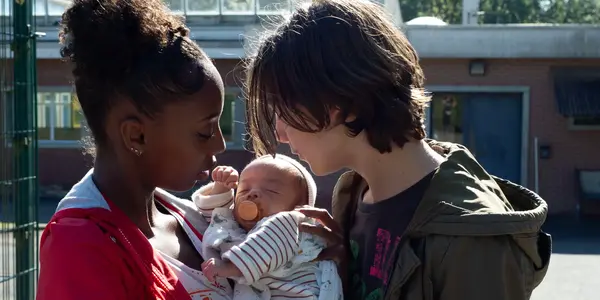
Of course the thing that ties together all of these movies is the fact that social and economic nets can only do so much and every character is essentially fighting for not just getting by with money but with dignity intact.
Unflinching Realism
The film follows several young girls, Jessica (Babette Verbeek), Perla (Lucie Laruelle), Julie (Elsa Houben), Naïma (Samia Hilmi) and Ariane (Janaïna Halloy Fokan), all around high-school age who need assistance in both pre-natal and post-natal care. They stay in a home that gives them the resources they need to stay well take care of their babies but there are certain rules and restrictions. The Dardennes approach their film with an unflinching realism and equally proportioned compassion, the same that they showed to the young father and mother in their Palme d’Or-winning L’enfant (2005). In many respects, this film is an extension of that one, with similar problems of finding housing, juggling jobs and money amid lack of family support, infidelity, as if to say the problems of Belgium’s youth haven’t really nudged forward more than a few centimeters in the last 20 years.
Reconciliations of the Past
The Dardennes continue their style of close-up tracking shots of the various girls at the center of the narrative, augmenting the intimacy of tears, hugs, laughter, and sniffling. The centering of human emotion in these stories, like Perla who lugs around stroller and has grandiose visions of moving in with her boyfriend after he gets out of jail, brings to light frustrating conflicting emotions.
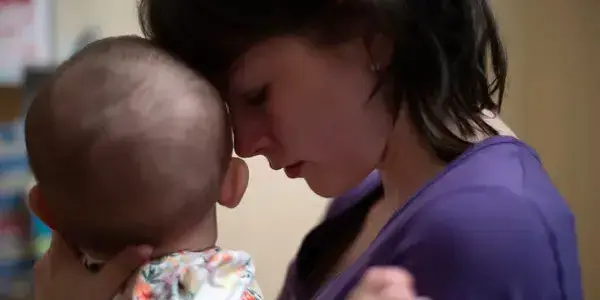
Of the film’s most heartbreaking and tear-inducing moments come from Julie’s several meetings with her estranged biological mother who she never met before. The Dardenne Brothers treat these moments not as revelations or plot twists, but as slow reconciliations of the past, never neat, never fully closed or wrapped up.
Conclusion
Social politics has always played a major role in the Dardenne’s films but here it becomes multi-faceted in a way it hasn’t before in their filmography. The Dardennes use motherhood to place a microscope to all of the haphazard “safety nets”, where care is offered but restricted and monitored and where extraneous factors – like the father, the family, jobs, education – are not considered. The naturalistic acting of the main cast highlights the hyper-realism of the directors’ style, which is tinged with just the right amount of melodrama to make it emotionally memorable.
Young Mothers released in theaters nationwide in the U.S. on January 9th, 2026

Does content like this matter to you?
Become a Member and support film journalism. Unlock access to all of Film Inquiry`s great articles. Join a community of like-minded readers who are passionate about cinema - get access to our private members Network, give back to independent filmmakers, and more.