









Golden Ear: Taylor Hackford & The Art Of Pop Songs In Cinematic Mediocrity


As a person who came of age in the 1980s, I was lucky enough to witness some incredible cultural, societal and artistic developments. The fall of the Berlin Wall, for example. Chernobyl. The wedding of Charles and Diana. Feathered mullets. David Byrne’s big suit. The “Velvet” Revolution. Cher’s renaissance. Perestroika. “New” Coke. Pegged jeans. MTV before it sucked. The Soviet War in Afghanistan. Pac Man. The Sony Walkman. “Just Say No.” Madonna before she got old. The Cure before Robert Smith got fat.
Even more life-changing, however, was my front-row seat to a unique (and unfortunate) cinematic trend: filmmakers getting wise to the potential box-office bump (not to mention additional revenue streams) offered by the strategic inclusion of pop songs written specifically for the film and sung by a talent de jour.
Which is the tie that binds such 80s offal as Flashdance, Footloose, Top Gun, Beverly Hills Cop II and Dirty Dancing.
Let’s face it: your average movie-going Joe probably couldn’t recall many plot specifics from the aforementioned films. If, however, you asked him or her to hum the ditty “Footloose” (by Kenny Loggins) they’d probably acquit themselves nicely. Same goes for Top Gun‘s “Take My Breath Away” (by Teri Nunn of Berlin), and Beverly Hills Cop II’s “Shakedown” (by Bob Seger). And Flashdance‘s “Flashdance…What a Feeling” (by Irene Cara). And Dirty Dancing‘s “(I’ve Had) The Time of My Life” (by Bill Medley and Jennifer Warnes).
Ugh…the ear weeps. Actually, just typing the words “Danger Zone” and “Let’s Hear It for the Boy” sets my teeth on edge. Remember all those stories you heard about America waterboarding extrajudicial prisoners back in the late aughts? All lies.
The actual method used to extract information involved playing a recording of Patrick Swayze‘s “She’s Like the Wind” over and over at high volume. Drooling and uncontrollable flatulance generally followed, symptoms that soon gave way to delirium and catatonia.
The Innovator
Let’s turn our attention to the man I hold most responsible for all the insufferable shite wafting from my FM radio back in my formative years: Mr. Taylor Hackford.
Know him? He’s the one married to Dame Helen Mirren. Also, he’s a filmmaker of some renown, nominated for the Academy Award for Best Director for 2004’s Ray. He also directed 1997’s The Devil’s Advocate, which happens to be a guilty pleasure of mine.
However, it can be argued that he’s best known for his prodigious output from the early 1980s: An Officer and a Gentleman (1982), Against All Odds (1984) and White Nights (1985), the alpha, beta and gamma of movies fully exploiting pop songs written specifically for their soundtrack.
Let’s take a peek at each film and the song(s) they made famous (or vice versa).
An Officer and a Gentleman
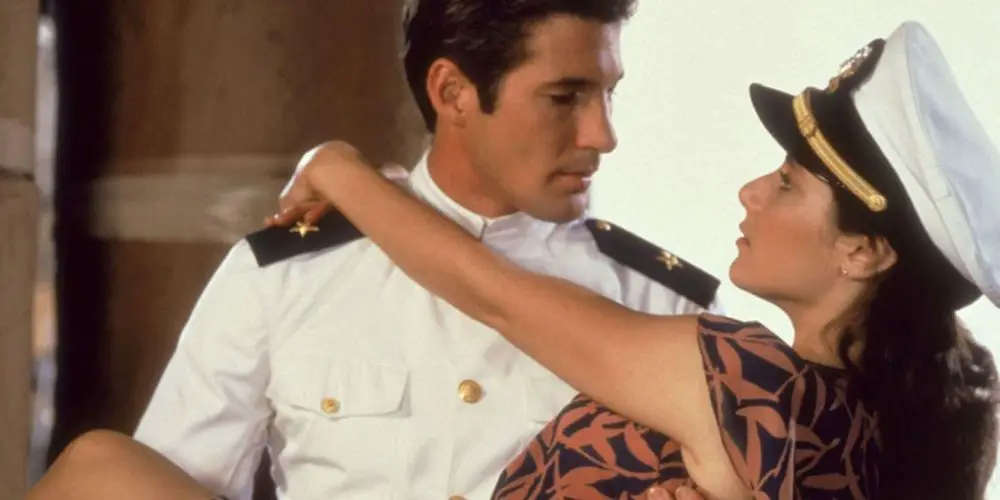
Richard Gere stars as Zack Mayo, a young man with a somewhat unconventional past (mom dead from suicide, dad partial to drink and hookers) bent on becoming a flyer via the Navy’s Aviation Officer Candidate School. In the way of his dream? Well, there’s the romantic distraction presented by local blue-collar girl Paula Pokrifki (Debra Winger). And then there’s (cliche alert!) his tough-as-nails Drill Instructor, Marine Gunnery Sergeant Emil Foley (Louis Gossett, Jr.). And let’s not forget young Mr. Mayo’s generally shitty attitude.
Intrigue follows, including beatings both verbal and physical (“I want your DOR, May-o-nase!”), challenging obstacle course runs, rough sex, weekend pass revocations, suicide, graduation and, finally, reconciliation.
A huge box-office hit when it was released, An Officer and a Gentleman also proved a boon to its three co-stars. Not only did it solidify Gere‘s place in Hollywood’s firmament (at least until he agreed to star in King David), not only did it expose Winger to a larger audience (at least until she dropped off the acting map sometime in the mid-1990s), it also earned Gossett, Jr. the Academy Award for Best Supporting Actor (at least until he flushed all goodwill down the toilet by starring in Enemy Mine and Iron Eagle).
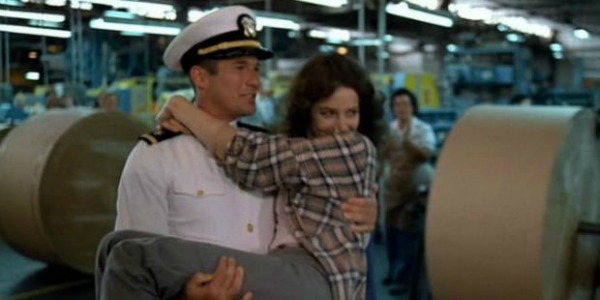
As for Hackford, he acquits himself nicely here, fashioning a gritty, profane and unsentimental movie. That is, until the eye-rolling final scene, which features Gere, in his Navy dress whites, literally sweeping Winger off her feet at her dead-end factory job.
Yet it’s here, amongst all the Cinderella cheesiness, that TaylorHackford makes a fateful creative decision. He inserts the song “Up Where We Belong” (by Joe Cocker and Jennifer Warnes), a giant block of cheese itself, under the proceedings. And with this deft touch, Hackford birthed, in one fell swoop, an iconic, if exasperating, romantic ending and a #1 hit on the Billboard Hot 100 chart.
The song can be heard here. Or, if you’d prefer the hilariously campy rendition from the 1983 Academy Awards, click here.
Against All Odds
A remake of director Jacques Tourneur‘s 1947 film noir Out of the Past, Taylor Hackford‘s 1984 film stars Jeff Bridges as Terry Brogan, a rickety professional football player recently cut from his team. In need of cash, Brogan decides to do some snooping for an acquaintance, a slime-ball nightclub owner named Jake Wise (James Woods).
It seems Wise is looking for his girlfriend, Jessie Wyler (Rachel Ward), who also happens to be the daughter of the owner of the football team that cut Terry. Despite having his head bashed in for years, Terry’s no dummy; the assignment, as odious as it may seem, could be a way back into professional football.
Intrigue follows, including ill-advised drag racing on US Highway 1, illegal sports gambling, murder, sex in picturesque Cozumel and, best of all, Alex Carras, the cuddly dad from that insufferable TV show Webster, playing a heavy who gets shot and then sunk with a rock into a fetid rainforest pond.
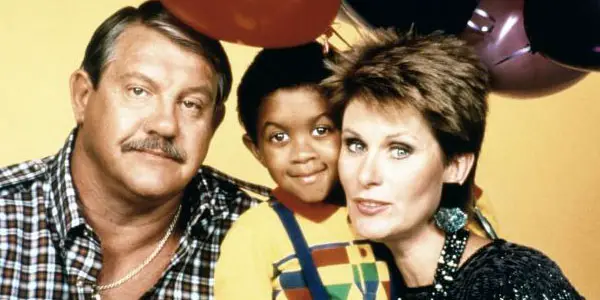
While the acting is uniformly fine, and Taylor Hackford‘s direction workmanlike, Against All Odds remains a somewhat flat neo-noir, forgettable the minute the lights go up.
As for the song that Taylor Hackford commissioned to play over the end-credits? Well, that’s a different story. Written and sung by the follically challenged Phil Collins, “Against All Odds (Take a Look at Me Now)” has withstood the test of time. Relatively simple in structure and featuring a patented Collins “In the Air Tonight”-like drum interlude, the song delivers an emotional wallop, something the film itself couldn’t. I dare anyone to tell me it’s not a guilty pleasure.
The song can be heard here. Or, if you’re a glutton for eye-rolling over-production, check out its rendition at the 1985 Academy Awards here.
White Nights
One can just imagine Taylor Hackford sitting in his production office in Hollywood circa 1984, yellow legal pad in hand, brainstorming his follow-up to Against All Odds.
Where to apply the old creative juices next? he wonders. Military and noir-themed adult romances are out, of course – been there, done that. How about a space-themed adult romance? Too expensive, perhaps? What about firefighter-themed adult romance, then? Or, better yet, an Antarctic-themed adult romance. Ice and snow…hmm. There may be something there…
He scratches the stubble on his chin, pencil hovering above page as he coaxes forth the vague idea that’s planted itself in his subconscious. Ice and snow. Ice. And snow. And then it hits him like polo mallet across the face: a Cold War-based adult romance set in Soviet Russia AND featuring dancers!
And so was born White Nights, quite possibly one of the goofiest films ever made.
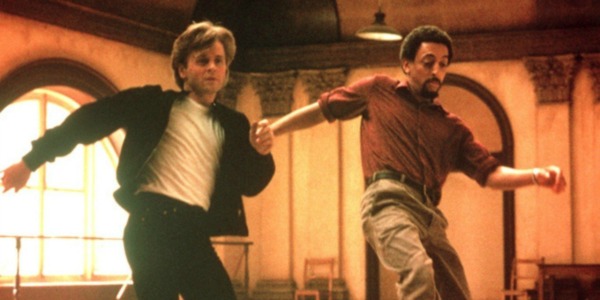
Mikhail Baryshnikov stars as Nikolai ‘Kolya’ Rodchenko, an internationally famous ballet dancer who, years earlier, defected from the Soviet Union to more politically tolerant climes. However, en route to a performance in Tokyo, Kolya’s plane has to make an emergency landing in – you guessed it – Siberia! (Oh, the fates!)
Stuck in the USSR and pressured by the KGB to perform at the Kirov ballet’s opening night, Kolya befriends a tap dancer named Raymond Greenwood (Gregory Hines), a defector himself, but from west to east. Soon, via plot machinations not worth summarizing, the two men plot to escape.
Intrigue follows, including trench-coated spies, unplanned pregnancy, the appearance of Helen Mirren as Kolya’s old dancing flame, an ill-advised scaling of an apartment building in Leningrad and synchronized dancing to Lionel Richie.
This being a 1980s Hackford film, White Nights‘ soundtrack overflows with hit singles, chief among them “Say You, Say Me” (by Lionel Richie), which won the 1985 Academy Award for Best Original Song, and the end-credits power ballad “Separate Lives” (vocal by Phil Collins and Marilyn Martin), which is this particular writer’s go-to karaoke song after consuming 30 beers.
“Say You, Say Me” can be viewed here. “Separate Lives” here.
It’s All About the Franklins
Soundtrack albums are nothing new, of course. Disney released the first back in 1937 concurrent with Snow White and the Seven Dwarfs. Up until the early 1980s, however, it seemed that the majority were either orchestral, such as John Williams‘ score for Star Wars, or cast recordings of a musical, such as The Sound of Music or Grease.
Enter the early films of Taylor Hackford. Suddenly, soundtracks embraced a third format, one in which the featured songs weren’t necessarily integral to the plot (as with a musical) but rather carefully written (or, if not original to the film, chosen) to, as Hackford once said, “…reflect what the film is.”
Hollywood had itself a great new revenue stream. Even if a movie completely tanked, money could be recouped by a well-designed soundtrack album. Thus, in some cases, the release of the soundtrack album became as important as the film itself.
A sad development in many ways; a song should never be more memorable than the movie in which it appears. But, then again, just think how many father-daughter wedding dances owe their existence to Bette Midler‘s “The Wind Beneath My Wing.”
One man’s nightmare, another man’s dream, I guess.
So, any songs you can think of that shine brighter than the movie in which they appear? How about films today?
Does content like this matter to you?
Become a Member and support film journalism. Unlock access to all of Film Inquiry`s great articles. Join a community of like-minded readers who are passionate about cinema - get access to our private members Network, give back to independent filmmakers, and more.
