










THE STRANGER: Existentialism Under the Sun


Albert Camus’s 1942 novel The Stranger is a classic story about the randomness and meaninglessness of life as embodied in the character of Meursault, a young man who reacts to the death of his mother, the affection of his lover, and the murder he commits one sunny day on the beach in Algeria in the same way: with indifference. It’s Meursault’s distinct, matter-of-fact narration—he’s truthful to the point of alienating everyone around him, refusing to lie to spare their feelings and incapable of understanding why that’s upsetting to them—that makes the novel so memorable, so it’s hard to blame filmmaker François Ozon for pulling so many passages word-for-word from the book for his new screen adaptation of The Stranger. Yet such dedication to remaining true to the novel while simultaneously spelling out on screen what was implicit on the page results in a film that, while meticulously acted and crafted, cannot help but pale in comparison to Camus’s work.
The Embodiment of Ennui
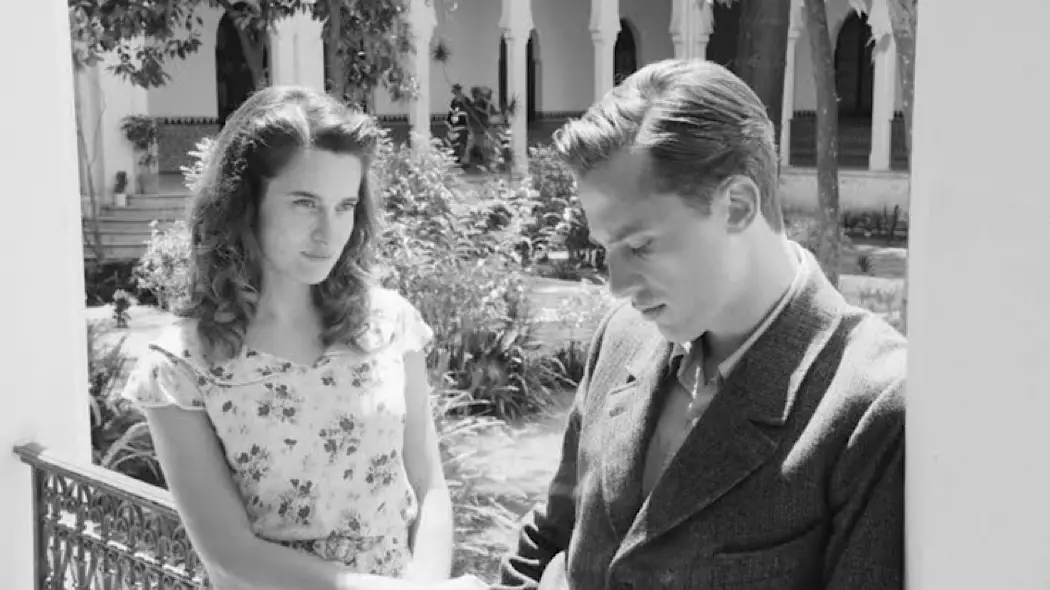
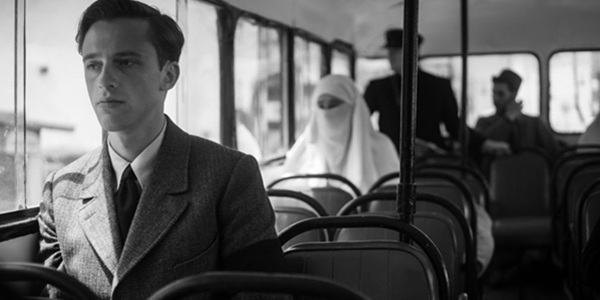
The Stranger opens with a clever, newsreel-style introduction to Algiers and the French colonial presence there, giving you the feeling that you’re watching a film that was actually made at the time that it is set; a feeling further accentuated by the gorgeous, high-contrast black-and-white cinematography from recurring Ozon collaborator Manu Dacosse. The bright sun and oppressive heat that are so key to the story’s feverish atmosphere radiate off the screen; everything looks and feels exactly how you would have pictured it while reading the book.

That includes our protagonist, Meursault. He is played to enigmatic perfection by Benjamin Voisin, whose keen eyes and razor-sharp cheekbones are attractive but also unsettling, a beautiful mask that barely conceals an empty center. When Meursault learns that his mother has died at the care home where he sent her to live, he goes through the motions of traveling there for her funeral; however, he refuses to look at her body or shed a tear for her passing, smoking a cigarette during the all-night vigil over her coffin with what can only be described as apathy. When he returns to Algiers, he begins an affair with a former coworker, Marie (Rebecca Marder, so good in Ozon’s The Crime is Mine). Later, when Marie asks him if he loves her, Meursault’s response is a blunt no, though he’ll marry her if that’s what she wants; he doesn’t care one way or another.
Meursault’s aimless drifting through life is brought to a halt during a seaside excursion with Marie and his neighbor, Raymond (Pierre Lottin). Raymond was caught beating his Arab girlfriend, Djemila (Hajar Bouzaouit), and now Djemila’s brother, Moussa (Abderrahmane Dehkani), and his friends are following him around, seemingly intent on revenge. So, after a violent encounter on the beach, Meursault takes Raymond’s gun, returns to where Moussa is lounging in the sun, and shoots him dead.
From Page to Screen
The second half of The Stranger deals with Meursault’s trial, a farcical procedure in which the French prosecutor insists that Meursault should be put to death as a soulless monster—not for the crime of murdering an Arab, which to the French is barely a crime at all, but for not crying at his mother’s funeral and going to see a comedy movie with Marie the next day. As Meursault’s lawyer pointedly asks at one point, “Is this man on trial for killing an Arab or burying his mother?” In the eyes of the French, Meursault’s inability to comply with societal expectations of how he should react to a parent’s death is far more of an indictment of his character than the pointless murder he committed, the victim of which is barely acknowledged in court.
In Camus’s novel, the Arab characters have no names and little to say; the story is told from Meursault’s point of view, and Meursault—like so many other French settlers in Algiers—barely acknowledges the Arab population as people. As a Frenchman born and raised in Algeria, Camus could not be said to be against colonialism; however, he was against the prejudicial treatment of the native Algerians by the French and strove to comment on it through The Stranger. But in putting the book on the screen, Ozon seems to have been afraid that this wasn’t obvious enough, and so makes decisions like giving Djemila a speech in which she pointedly tells Maria, “No one cares about my brother. He is an Arab. Only your Frenchman and his mother count.”

This heavy-handed scene perfectly exemplifies where Ozon goes wrong in adapting Camus; he manages to both copy and paste too much directly from the book while also not trusting his audience (a large portion of whom have probably read the book, mind you!) to understand what Camus is saying without hitting them over the head with it. It doesn’t help that saddling Djemila lines like this, while admirable in giving her voice she doesn’t have on the page, doesn’t really make her any more well-rounded a character, more just a symbol of French guilt. In both book and film, she deserves better.
The film also suffers from losing Meursault’s first-person narration, instead translating certain memorable passages from the book into moments of dialogue that come across much more awkwardly on screen than they did on the page. Still, the actors all do their best to make it work, including Denis Lavant as Meursault’s dog-owning neighbor and Swann Arlaud as the chaplain who tries (and fails) to convince Meursault of the existence of God. And if you weren’t already convinced that Voisin and Marder are stars on the rise, you will be after watching them here, and not just because they are so attractive together that they almost make your eyes hurt.
Conclusion
The Stranger is a film that feels scared: scared to diverge too much from the words of Camus, but also scared that people won’t take the right message from those words. The result is visually stunning, well-acted, and rich with the heady atmosphere one gleans from the pages, but still leaves you wanting more.
The Stranger opens in New York at Film at Lincoln Center and Angelika Film Center on April 3, 2026, and in Los Angeles at Laemmle Royal and Glendale on April 10, 2026, before expanding nationwide.
Does content like this matter to you?
Become a Member and support film journalism. Unlock access to all of Film Inquiry`s great articles. Join a community of like-minded readers who are passionate about cinema - get access to our private members Network, give back to independent filmmakers, and more.
