













ALL YOU NEED IS KILL: Time Loop Anime Lives And Dies On The Repeat



All You Need Is Kill, the light novel by Hiroshi Sakurazaka and Yoshitoshi Abe, saw success in Hollywood when it was adapted as Edge of Tomorrow with Tom Cruise and Emily Blunt. The story follows a human soldier who dies combating an alien invasion only to wake up earlier that morning, caught in a time loop by sci-fi forces beyond his comprehension. He soon encounters and befriends Rita Vrataski, a badass special forces war hero who also has experience looping the same day over and over.
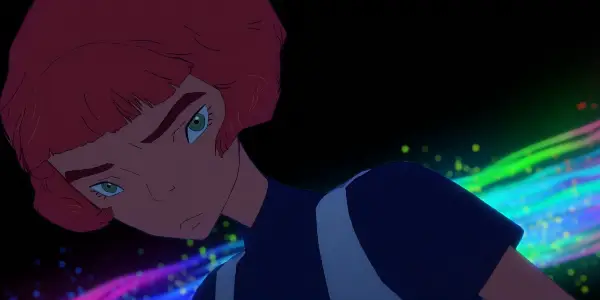
Studio 4°C’s new take on All You Need Is Kill, stylized with all caps, is the first anime adaptation of the source material and the first film from directors Ken’ichirô Akimoto and Yukinori Nakamura. But the new film makes too many changes to the story that radically alter the themes and morals of the novel to the overall detriment of the work. Combined with its dull and repetitive story, the uncomfortable questions it raises about Japanese society, and the character design, which is ugly as sin, ALL YOU NEED IS KILL is one loop that you probably shouldn’t experience.
A Unique Vision of an Alien Invasion
The film, which I saw at the Scotland Loves Anime 2026 festival, at least delivers one interesting concept: the invasion itself. Far from the traditional alien invasion, with giant ships and humanoid monsters with laser beams, this is far more esoteric. One day, a giant extraterrestrial plant landed on Earth (in Japan, of course), but no incursion followed, no war. Instead, the plant seemingly went dormant for a whole year, leaving the humans with the United Defense Force to stage regular clean-up missions on and around the plant. The plant is also called Derol, which rules.

As a sci-fi concept, it’s deliciously unique — though the premise and the rainbow colors of the plant likely owe a debt to Jeff VanderMeer’s Annihilation and Alex Garland’s film adaptation of it. Thank God, too, that we have a story about aliens that doesn’t begin with a War of the Worlds-style invasion. Too many movies and TV shows depict encounters with alien life as all-out, guns-blazing wars, and that form of media, while it undeniably has a place in our society’s mythos, in the long run also encourages conservatism, ignorance, and xenophobia. Meeting another species will not always result in genocide, and the solution to every problem is not always a man with a gun or Randy Quaid on a suicide mission.
The premise of the peaceful alien appearance quickly evaporates, however, once the thing opens up and releases spores. Those spores are, naturally, 12-foot-tall plantlike monsters that shred the humans to bits.
Only a High Schooler Can Save the World
Rather than the side character, Rita (voiced in Japanese by Ai Mikami) is our protagonist this time around. She’s aged down to a high school student instead of the seasoned badass Rita in the novel, who’s probably in her 20s or 30s. In this version of the story, cleaning up after the massive alien plant is sort of like Rita’s shitty summer job. Every day, she ventures out to the crash site with her mech suit and drills away at the plant. But the day the spores come out, she kills one before she dies, thus inheriting some of the species’ time loop powers. If you’ve seen Groundhog Day or Edge of Tomorrow, you know how it goes — “I wake up every day, right here, right in Punxsutawney, and it’s always February 2nd, and there’s nothing I can do about it.”
She starts the story with no combat experience and no clue how to beat the aliens, and she has to grind loops until she finally becomes anything close to the “Full Metal Bitch” of the original story. (Perhaps Studio 4°C is hoping this film is successful enough to do a sequel.) The usual players putter about in the margins, including snobby mean girls, reclusive nerd love interest Keiji (Natsuki Hanae), and a giddy scientist studying Derol (Kana Hanazawa), who mostly exists to dump exposition.

Time loop movies live and die by their writing. Groundhog Day, for instance, expertly balances zany side characters and a love story with Bill Murray’s quest for enlightenment, and that’s what’s made it such an enduring classic. Edge of Tomorrow, too, deftly develops the mystery of its premise while putting Tom Cruise’s character on a compelling journey, all leading up to a memorable sci-fi climax.
ALL YOU NEED IS KILL sorely lacks that sort of competence and rewatchability. Rita is slow to realize exactly what’s going on with her, and by the time she finally gets her shit together and begins trying to fight the aliens and escape the loop, we’re already about 40 minutes in. The remainder of her adventure focuses on her relationship with Keiji, who has also been aged down to an incel high schooler.
Disturbing Messages About Young Women in Japan
Ostensibly, the story of a young girl who uses her time loop powers to repel an alien invasion is one of female empowerment. Like so much anime before it, positioning this high schooler as the potential savior of humanity gives agency and power to someone who, in real life, doesn’t have much control over her own life besides what to have for lunch and how hard to study for exams.
But this trend in Japanese anime and manga belies a certain uniquely Japanese misogyny — young schoolgirls, usually drawn in lascivious short skirts with suggestive figures, become the objects of power fantasies that equate their femininity with their sexual innocence. These stories also lead to the perception that young ladies in Japan are as mature and capable — and therefore sexually available — as adult women.
Japan is a harshly sexist society, one where women and girls are wary of walking home alone at night and where, at rush hour, train carriages have to be separated by sex to prevent harassment and assault. Nearly every woman and girl in major cities has an experience of being molested on a train. Birth control is not readily available in Japan. And it’s still a very common expectation that married women will quit their jobs and focus full-time on housework and child-rearing, leading to fewer corporate opportunities for women, lower pay, and fewer benefits.

Not only does ALL YOU NEED IS KILL de-aging its female hero promote the perverse, sexist worldview shared by many Japanese men, but it also introduces a problematic romance with Keiji. Keiji is that reliable Japanese archetype of the male incel schoolkid who’s bullied for being nerdy but always wins the girl in the end. (See also: Dandadan.) Rita’s arc in the film is not merely about gaining the confidence and skills necessary to triumph over the aliens — the fulfillment of her coming-of-age (i.e. conquering the time loop) requires her to consummate a romantic relationship with Keiji.
Conclusion
ALL YOU NEED IS KILL fails as an adaptation and fails as a time loop movie, and it’s plain unengaging and hideous to boot. Look at those character designs and tell me honestly who is meant to be an alien. Everyone’s eyes are a football field apart from one another. Luckily for all of us, if we want a good adaptation of the light novel, we can just rewatch Edge of Tomorrow. And rewatch it. And rewatch it.
ALL YOU NEED IS KILL is currently showing in cinemas.
Does content like this matter to you?
Become a Member and support film journalism. Unlock access to all of Film Inquiry`s great articles. Join a community of like-minded readers who are passionate about cinema - get access to our private members Network, give back to independent filmmakers, and more.