









QUEEN OF CHESS: A Chess Documentary In Search of a Purpose

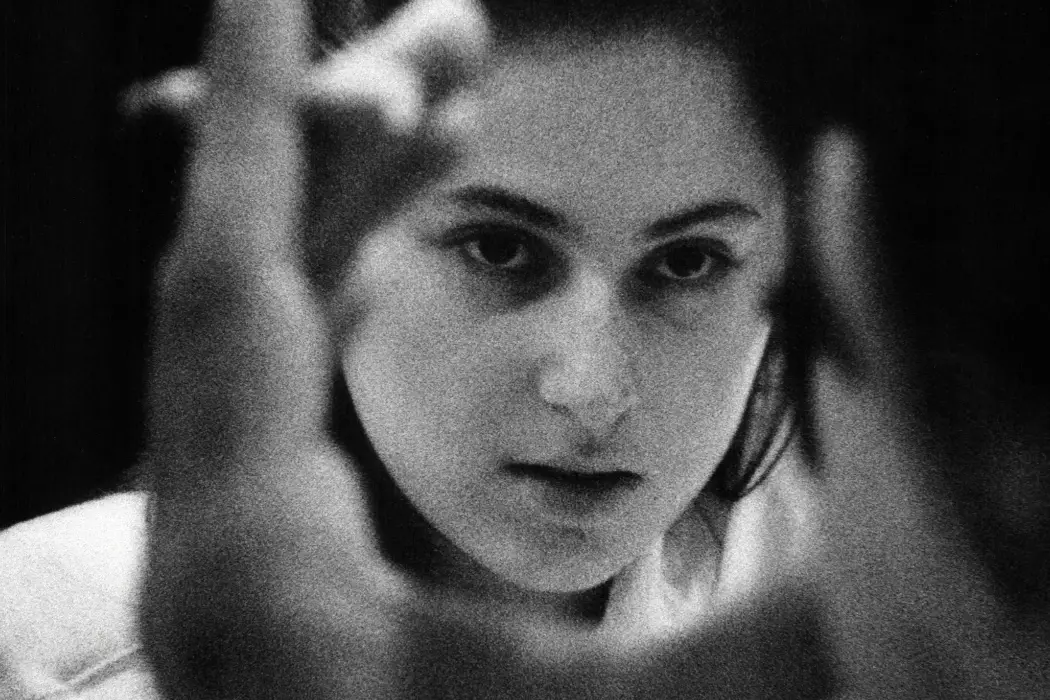

Judit Polgár is one of the greatest chess players of all time. In 1991, she became the youngest-ever chess Grandmaster, and she went on to defeat 11 current and former world champion players before retiring from chess in 2014. In a sport that has historically been male-dominated, she is also regularly recognized as the greatest female player of all time.
All of that can be gleaned from her Wikipedia page rather than the new documentary on Netflix about her, Queen of Chess. Directed by Rory Kennedy, the filmmaker behind such Netflix docs as The Volcano: Rescue from Whakaari and Downfall: The Case Against Boeing, Queen of Chess disappointingly takes a very shallow look at its subject and the sport she dedicated her life to.
Raised As a Chess Prodigy
Largely told in chronological order, Queen of Chess begins by showing how Polgár’s father, László, raised her and her sisters as chess prodigies in Hungary in the 1970s and ’80s. Since the age of 5, Judit’s parents forced her to train at chess, usually for over 10 hours a day. She and her sisters were all home-schooled to ensure they could spend as much time as possible training. Clearly, the strategy paid off for Polgár’s career, but just try to estimate the psychological toll this had on her life.
To hear Judit’s father tell it, “The girls had a great time.” But it’s hard to see this as anything other than child abuse; these are children, after all, too young to make their own decisions about their lives, being exploited as guinea pigs by their parents, who are determined to mold them into prodigies. Judit was a 5-year-old who was treated like an experiment.
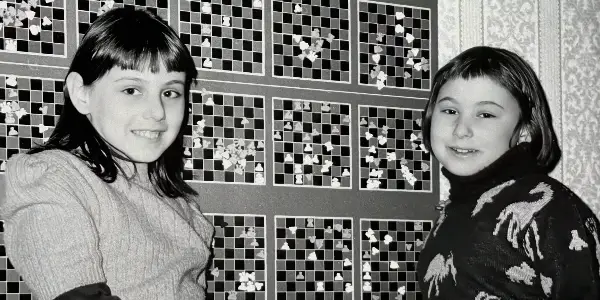
The film is casually indifferent to all of this, however. Kennedy never seems to put her hand on the scales, to pressure the father (who appears as a talking head throughout) into talking about this abusive upbringing — it’s all footnotes in the biography of a chess genius, told in a blithe, winsome, fleeting, and ultimately incurious way typical of many Netflix documentaries.
The only moment of revelation in the film is saved for the very end, when László tells the camera, “It was a fabulous achievement for her. … Our experiment worked. But you can only say that Judit was one of the best players in the world. To be the number one among the world’s top players, she would have had to work three or four hours a day more.” It’s a rattling admission that László feels he could have gone even further, not content with having sacrificed his daughters’ normal childhoods for his own morbid determination to raise a prodigy.
Judit Polgár vs. Garry Kasparov
In addition to its depiction of Polgár’s fraught childhood, Queen of Chess also dramatizes her lifelong rivalry with Russian chess Grandmaster Garry Kasparov. Treated by the documentary as the poster boy for the overly male world of elite chess, Kasparov brushed pawns with Polgár on numerous occasions, having a dozen or so public matches with her throughout their careers. The film makes much hay out of Kasparov’s cheating during a 1994 championship match. They later formed a sort of professional friendship, with Kasparov inviting the Hungarian Grandmaster to his private villa to train together.
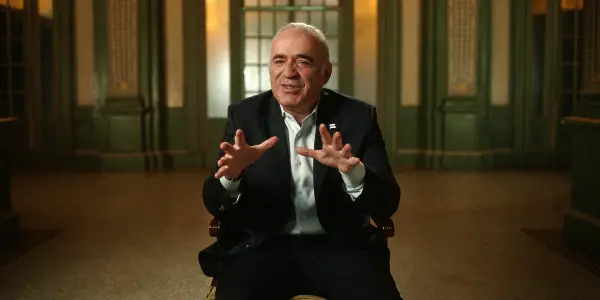
This focus on their relationship comes at the expense of nearly everything else in the film. We don’t learn, for instance, about Polgár’s strategies, how she favored direct, relentless, aggressive attacks and the sort of niche, confounding gambits that you read about in chess books but rarely see in tournament play. We don’t learn about her play style, either, about how she would study her opponents’ styles and tailor her attacks to each competitor on a strategic and psychological level. We don’t learn enough about her personal life — how she managed to continue her chess career during two pregnancies, or how she chose to approach parenting given her own abnormal childhood. And we definitely don’t learn about her politics — what she thought of her home country, having come of age in Eastern Europe at the end of the Cold War, about her Jewish identity, or about how several members of her immediate family moved to Israel.
In place of more meaningful themes, we have Kasparov, who is in the film so much that Queen of Chess should have just been called “Polgár vs. Kasparov” — but then, what do we actually gain from seeing their professional rivalry? Besides an allegory for the broader struggle for women to get a seat at the men’s table in the chess world, the only thing this Polgár-Kasparov relationship accomplishes is killing time. After all, a film must be about something — and instead of focusing on the things that really matter, Queen of Chess settles for the easy underdog saga of a little Hungarian girl training until she can wipe the floor with the reigning champ.
Feminist If You Squint Hard Enough (And Ignore Everything Else About the Movie)
One doesn’t have to try hard to turn Polgár’s story into a feminist parable of victory against the male establishment. Nearly every male champion she fought has said in interviews that women are bad at chess. They’re too emotional, they’re too weak, they’re too aggressive, they should stick to having children, etc. The documentary includes many such sexist statements against Polgár and wins cheap shots by showing how her rise to fame proved them wrong.
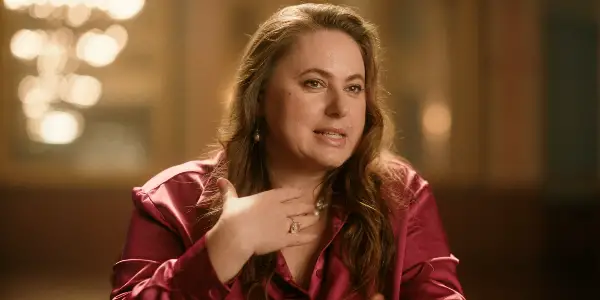
Queen of Chess dedicates much time to gently waxing poetic on the sexist, exclusionary culture of a sport in which the sole explicitly female piece on the board is far more powerful than her simpering, weak male counterpart. This vague feminism is assisted by grungy girl-pop like “Dreaming” by Blondie or “Pleasure” by Girls At Our Best!, while the savvy score by Camilo Forero also tries to convince you that what you’re seeing is part of some grand empowering narrative arc.
But the content of the film undermines this feminist message. If, like me, you see Polgár as a woman robbed of a normal, happy childhood by her domineering father and turned into an instrument for his poisonous, vicarious fulfillment, the feminist potential of the film quickly sours into a tone-deaf attempt to easily squeeze a complex woman into a cookie-cutter Hollywood narrative. The film’s total lack of interest in Polgár’s personal and professional life beyond the basic sketches of her chess career, childhood, and marriage also feels like a missed opportunity at best and a misogynistic reflection on the incuriousness of the filmmakers at worst.
Conclusion
In theory, this is the perfect movie for me. I love chess, and have done for a few years now, ever since a girlfriend introduced me to Chess.com in 2021. I wrote my thesis and worked a day job between regular five- and 10-minute rapid matches of chess in the library. I also reluctantly interned for the neo-con think tank the Renew Democracy Initiative for a few months during the pandemic, where Garry Kasparov is the chairman, so I have a bone to pick, albeit indirectly, with the man.
But not only is Queen of Chess a shallow, vacuous treatment of a complicated woman’s life story — it’s also formally stuck in the past. Chess is among the hardest sports to capture dramatically on film, unless you take some wild formal leaps or stick an expert on-screen for live commentary and rigorous analysis.
Today, though, chess is more popular than ever. Online chess attracts millions of casual and dedicated players alike, including myself. And thanks to the rise of compulsively watchable champions like Magnus Carlsen, Hikaru Nakamura, and Gukesh Dommaraju as well as many massive YouTube channels and streamers, chess is not only easily accessible but also fun and engaging. A better film would embrace these new audiovisual possibilities of chess game analysis, but Queen of Chess is instead content to present a dubious, skewed, and unambitious picture of its subject’s life.
Queen of Chess is currently streaming on Netflix.
Does content like this matter to you?
Become a Member and support film journalism. Unlock access to all of Film Inquiry`s great articles. Join a community of like-minded readers who are passionate about cinema - get access to our private members Network, give back to independent filmmakers, and more.