

action

Before watching Ant-Man, it would be safe to predict that the movie would be the film that destroys the foundations of the Marvel Cinematic Universe. This is a film that has suffered from well-publicised production troubles, leading many to question the artistic integrity of the directors the studio chooses to helm its projects, whose directorial vision has to be sacrificed in order to create another chapter in studio head Kevin Feige’s grand master plan. Production troubles sometimes lead to fantastic movies, but more often than not, they lead to gigantic box office flops – not even the seemingly unbeatable Marvel can overcome that, surely?

Sequels sell like hotcakes. Filmgoers cannot be faulted for summing up today’s film industry simply as that. We don’t really need to draw up any charts or statistics to figure out that half of the films in 2015 consist of sequels.
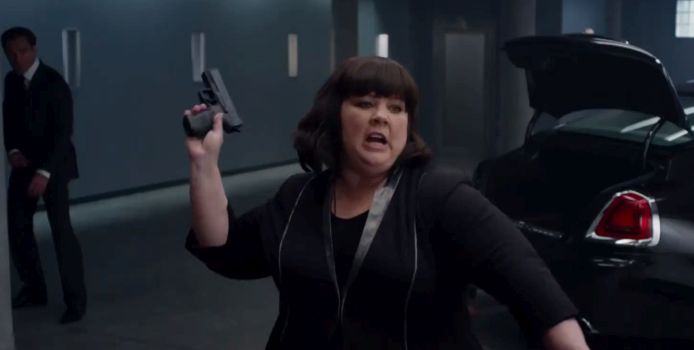
Like many people, I was a great fan of Bridesmaids and The Heat, so it was likely that the newest film to pair Paul Feig and Melissa McCarthy would be right up my alley. Likely, but even I had my doubts over Spy. A spy comedy?

The central idea to Tomorrowland, Disney’s latest attempt to turn a theme park attraction into a blockbuster spectacle, is flawless. Instead of being pessimistic about the future, why don’t we adopt the same attitudes of previous generations and look at the future with a sense of optimism, awe and wonder? After all, today’s younger generations are being fed miserable visions of the future by pop culture, with every major summer tentpole movie of the past few years having villains who argue that the best way to save both the planet and humanity as a whole is to destroy it.

Anyone who is familiar with George Miller’s Mad Max series must have been eagerly anticipating his latest as much as I have. It has now been 30 years since we last saw Max in his post-apocalyptic desert world. But it is almost as if no time has passed.

When I think back to Avengers: Age of Ultron, the best thing I can compare it to is a multi-layered Impressionist painting. From up close, it often looks and feels like an over-stuffed mess, as if director Joss Whedon was trying to cram as much as possible into his 2 hour and 20 minute timeframe.

Electric Slide is based on the life of the bank robber Eddie Dodson. Originally a furniture salesman, Dodson found fame in 1983 when he robbed a number of banks – 64 banks in 9 months to be exact. Directed by Tristan Patterson (his first fiction feature film), it stars Jim Sturgess as Dodson and Isabel Lucas as his girlfriend Pauline.
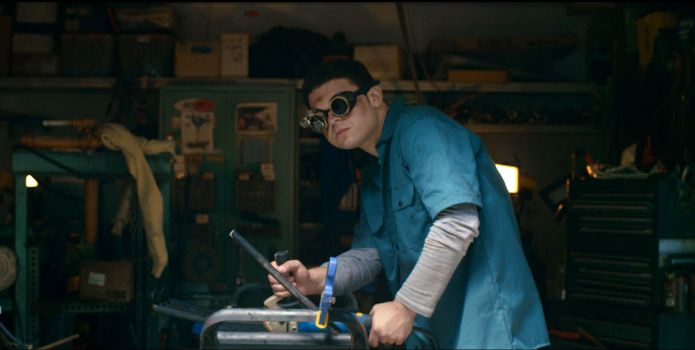
Super Zero is a short by the filmmaker Mitchell L. Cohen. The story centres around Josh Hershberg, a young guy with not much to live for who discovers he has terminal cancer.

Neil Blomkamp is still a relatively new director in the game, though he has now done three movies. His first, District 9, is an intensely original feature, focusing on the subject of extraterrestrials who have come to Earth and suffer to live alongside the community of South Africa. It is at once both entertaining and politically charged, and was so well-received upon its release that it was even nominated for Best Picture at the Oscars, a very rare accomplishment for a sci-fi.

First, think of the most overused plot of an espionage action thriller. Throw in a young, rebellious kid who dares to walk in his father’s once-proud footsteps. Finally, mix in a cartoonish super-villian with unbelievable plans to destroy the world and a super-secret spy agency that is at their wit’s end in their attempts to stop him.
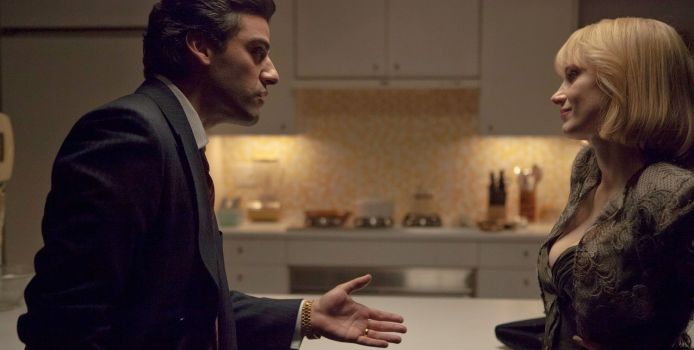
J.C. Chandor may be just starting out, but his film resume is already very impressive.

Let’s say Star Wars meets The Matrix. What comes to mind? An all-out intergalactic battle?

It is undeniable that the new millennium has seen fantasy novel adaptations reign supreme over Hollywood territory. It began in the year 2001 when the British again invaded America: now in the filmmaking industry.
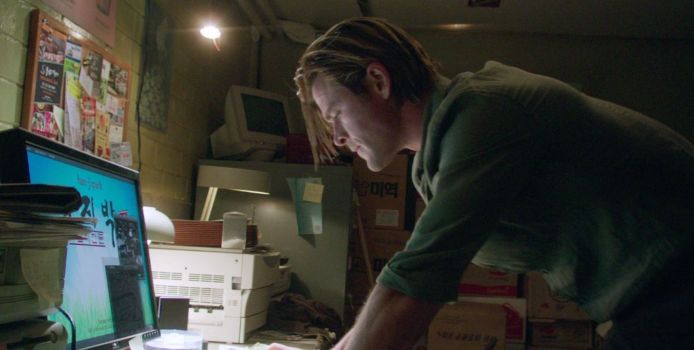
Although many are still reeling from the aftershocks of the Sony hacking scandal, the growth of the cybercrime era had actually reached red alert long before the North Koreans. It is quite frightening to imagine how a person could be as deadly as a nuclear weapon with just one click of a keyboard, and it remains a problem unresolved by international governments. As always, Hollywood’s part on this is to jump on the bandwagon, establishing a new genre of its own with collective bits of movie magic in order to turn in easy money for film studios.
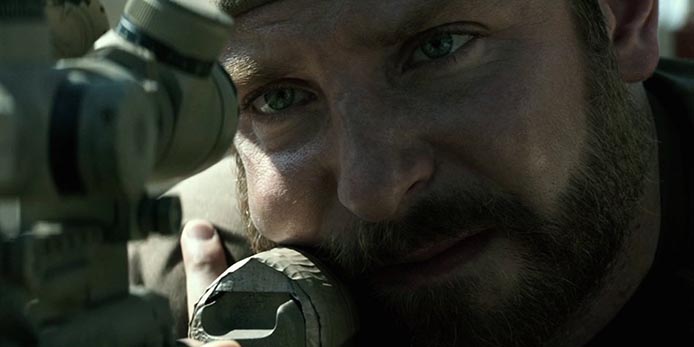
When the Oscar nominations rolled in on Thursday, perhaps the biggest surprise – other than the snubs for Selma – were the six nods including Best Picture and Best Actor for American Sniper, a movie which few expected to be in the running after getting no attention from the Golden Globes or BAFTAs. There was an even bigger surprise a few days later, when it was announced that the film drew in a stunning $89 million in its opening weekend, which is more than most of last year’s summer blockbusters. The Iraq War drama snuck up on the awards race out of nowhere, and shattered January box office records beyond all expectation.