






THE PERFECT NEIGHBOR: Just Another Shameful, Exploitative True Crime Doc


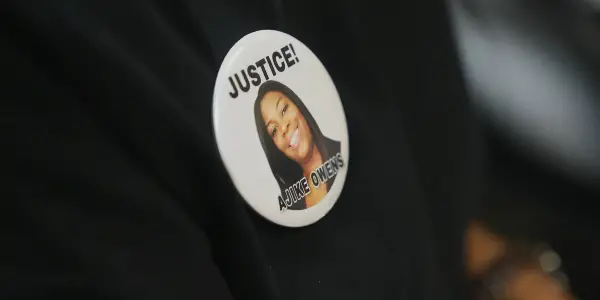
Ajike Owens should still be alive. The mother of four was shot by her neighbor one night in a suburban neighborhood in Ocala, Florida, in June 2023. She had approached her neighbor, Susan Louise Lorincz, about a dispute she had with her kids — Lorincz had allegedly stolen her son’s tablet, and Owens was trying to get it back. Lorincz took a handgun and fired through the locked door, killing Owens in the presence of her young son. Lorincz later told police that she feared for her life, worrying that Owens was going to break down her door and hurt her. She was convicted of first-degree felony manslaughter with a firearm and sentenced to 25 years in prison.
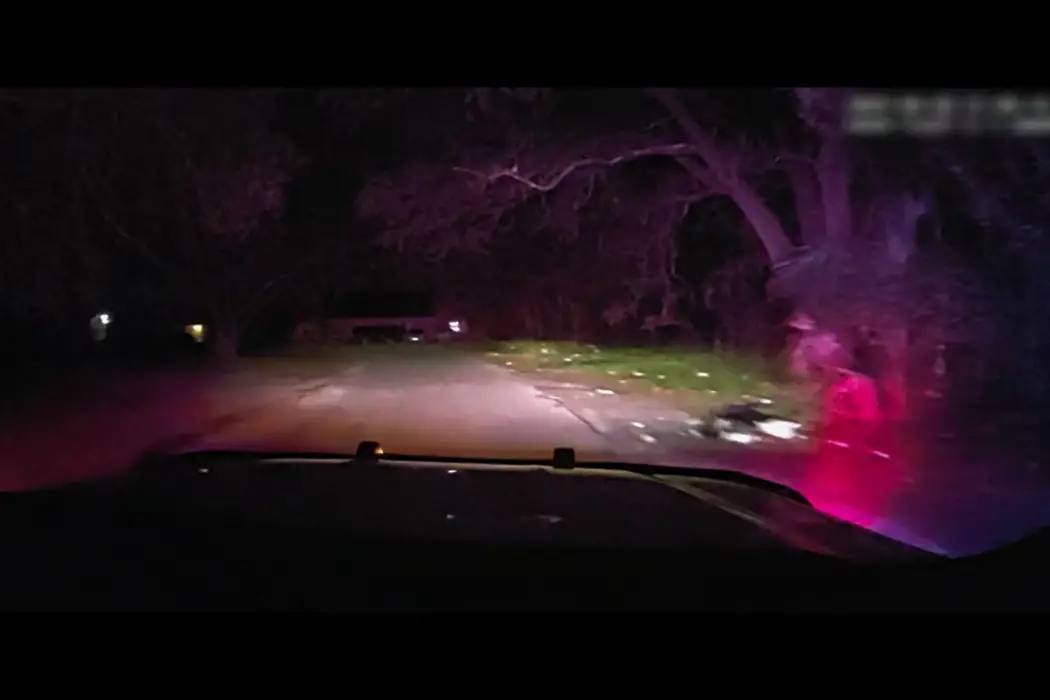
This cruel, unfortunate saga is the subject of the new Oscar-nominated documentary The Perfect Neighbor, a film that uses body camera footage obtained from police and Ring camera footage obtained from neighbors to assemble a unique observational archive film. The film is directed by Geeta Gandbhir, an American filmmaker who began her career editing docs for HBO and later collaborated with Spike Lee on two Hurricane Katrina projects. Gandbhir, together with editor Viridiana Lieberman, presents a fly-on-the-wall look at police incompetence in real time as her film tries to scrutinize Florida’s Stand Your Ground laws and ultimately create a kind of elegy for Owens.
Using Body Camera Footage to Enter the Community
The film moves chronologically from police calls responding to Lorincz’s incessant demands in 2022 and 2023, as she alleges time and again that the neighborhood children are terrorizing her by loudly playing near her home, trampling her signs, and filming her without her consent, among myriad other spurious claims. As the months go on, we see just how much Lorincz depends on her white privilege, calling the police for every little (unfounded) complaint she has against her neighbors.
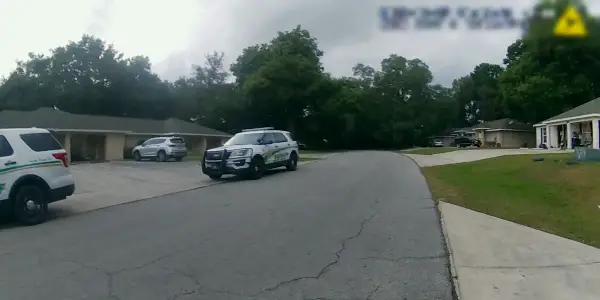
As the film is told primarily through body camera footage, we enter this Ocala neighborhood from the perspective of the cops. Now, this is, truthfully, a novel idea for a true crime film or show — these stories tend to be told according to the official police record anyway, so The Perfect Neighbor efficiently cuts out the middleman.
It also reminds us of the ubiquity of body cameras among American police forces. They became nearly universally adopted by American police in an attempt to increase transparency, improve encounters with civilians, and hold cops accountable after many high-profile cases where they murdered people of color. But also present is the eerie, somewhat disturbing sense that body cameras are yet another method by which our lives are recorded, constantly, in countless ways that we aren’t even aware of. Watching The Perfect Neighbor reminds us that we’re living in the panopticon and have been for some time.
Okay, But What Does the Body Camera Actually Do For the Film?
The practical purpose of the body camera footage is to replace traditional filmed interviews. Gandbhir said, in a Netflix-distributed Tudum feature about the film, that she was hesitant to “retraumatize” the community by interviewing them about Owens’ death for the movie. (This decision ultimately has a knock-on effect that effectively ruins the film.)
The use of the body cameras, on a theoretical level, proposes alternate frameworks for interpreting The Perfect Neighbor. What might have otherwise been a story that foregrounds the loss faced by this community becomes instead a warped view of police incompetence and the failures of the state in Florida.
Gandbhir has said that the film is about “the intersection of weaponized racism and unfortunate lax gun laws and the weaponization of predatory laws like Stand Your Ground” as well as “the powers that be trying to polarize us.” She wants viewers to see in Lorincz and Owens their own neighbors and members of their communities, encouraging them to understand the events of The Perfect Neighbor to be microcosms of wider structural problems in American society — she sees this as a story of a community first and foremost.
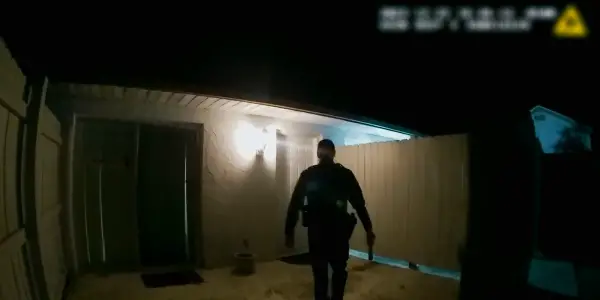
But is it? Utilizing police body cameras for your film all but obliterates any potential your art has to deconstruct and criticize the institution. As Audre Lorde said, “The master’s tools will never dismantle the master’s house.” There’s a reason that stories of police violence’s impact on individuals and communities are usually told in documentary films via a poetic mode (as in Did You Ever Wonder Who Fired the Gun?) or a traditional participatory mode more typical of nightly news (as in Whose Streets?). Poetic documentaries foreground the individual perspective, which often helps guide the viewer through events and inform their understanding, and participatory or expository docs tend to erase the individual voice and instead foreground the subjects, allowing the main characters in the drama to explain for themselves, in their own words, what happened and why. The Perfect Neighbor breaks with tradition, but I think it does so against its own self-interests.
Feasibly, the police can and should have done much more to understand the threat Lorincz posed to her community and address it head-on, possibly by contacting social services or by getting a warrant and searching her property for firearms. Instead, so much of their police work involves providing conflicting advice to the local children and meaningless posturing with the Black families so that they look like cool cops. And because the film adopts their perspective for 95% of its runtime, Gandbhir never has a chance to identify the ways in which the police failed the people of Ocala.
Gandbhir wanted to tell a story that mourns Owens’ life, but the resulting documentary focuses so much on the police and their interactions with Lorincz that Owens barely registers as a character. She wants to make a film about Florida’s Stand Your Ground laws, yet the laws are only referenced once in the whole film — in the police interrogations in the final 10 minutes — and again in the closing titles. An audience that does not already understand Florida’s Stand Your Ground laws will be completely lost for The Perfect Neighbor.
The True Crime Circus
As a film about racism and privilege, The Perfect Neighbor again falls short, because it spends so much time overtly casting Lorincz as a purely evil, spiteful villain rather than understanding why she’s like that and the ways in which her crime could have been avoided. (That’s the deeper meaning that interviews can produce, which Gandbhir obviously didn’t do here, at least not for the finished film.)
Even in its sarcastic title, The Perfect Neighbor at all times tries and succeeds at dragging Lorincz’s reputation into the muck — deservedly so, but the phenomenon of documentary-as-hitpiece is a circus act unique to the streaming era, and such predilections often sacrifice meaningful analysis in favor of arrogant character assassination. Lorincz is not, by any stretch of the imagination, an honorable or respectable person, if her characterization here is even halfway true. But the best true crime documentaries move beyond the good-evil binary to examine the social and political dimensions of what they depict. The Perfect Neighbor gets too wrapped up in its own artifice — and its own antagonist — to make a definitive statement about anything we see on screen, least of all the fact that this is all being shown to us via police body cameras. That the intended meaning of the documentary is haphazardly thrown out at the end of the film in a title card educating us about Stand Your Ground laws should indicate that the preceding 90 minutes summatively fail to tell us anything of value.
Gandbhir also fails at engaging the community in any substantive way, since she does not platform them until after Owens’ death. A better film might have included interviews with the neighbors so that we can understand them and get a glimpse into their lives. Instead, the film rides with the cops for the majority of its runtime before abandoning its own body cam conceit in favor of filming Owens’ actual funeral and the protests in response to her killing. It all winds up feeling exploitative instead of respectful, carnivalesque instead of dignified. Must we watch doorbell camera footage, for example, of Owens’ son racing to the home and begging someone to call 9-1-1? Is it not enough to show her funeral? Must we also see her son on what is likely the worst day of his life?
Conclusion
I recognize that The Perfect Neighbor comes from a place of extreme sadness and heartfelt loss. Owens was a family friend of Gandbhir, whose sister-in-law was Owens’ best friend. It’s important to recognize just how devastating, shocking, and horrific her death was — because although the film has many problems, that shouldn’t negate the terrible injustice that happened in Ocala.
But critics need to be more comfortable with separating a film’s subject from its formal execution. The Perfect Neighbor utilizes a conceit that’s interesting for all of five minutes until it drops the body camera footage briefly for a scene-setting aerial shot. (“This must be from the body cam of a flying cop,” I said to my wife.)
In a bubble, the formal adventurousness of The Perfect Neighbor would be laudable, perhaps even award-worthy. But the true crime documentary, the ignominious genre to which this belongs, is a grotesque art form that time and again has exploited victims, sensationalized brutality and violence, and valorized police officers — and unfortunately, I found that The Perfect Neighbor bears many of these problems. However noble the goals of the filmmakers might have been, The Perfect Neighbor is an oil-and-water collision of a shoddy formal conceit and a misguided approach to telling Owens and Lorincz’s stories.
The Perfect Neighbor is currently streaming on Netflix.
Does content like this matter to you?
Become a Member and support film journalism. Unlock access to all of Film Inquiry`s great articles. Join a community of like-minded readers who are passionate about cinema - get access to our private members Network, give back to independent filmmakers, and more.