











PALESTINE ‘36: Endurance Versus Strength

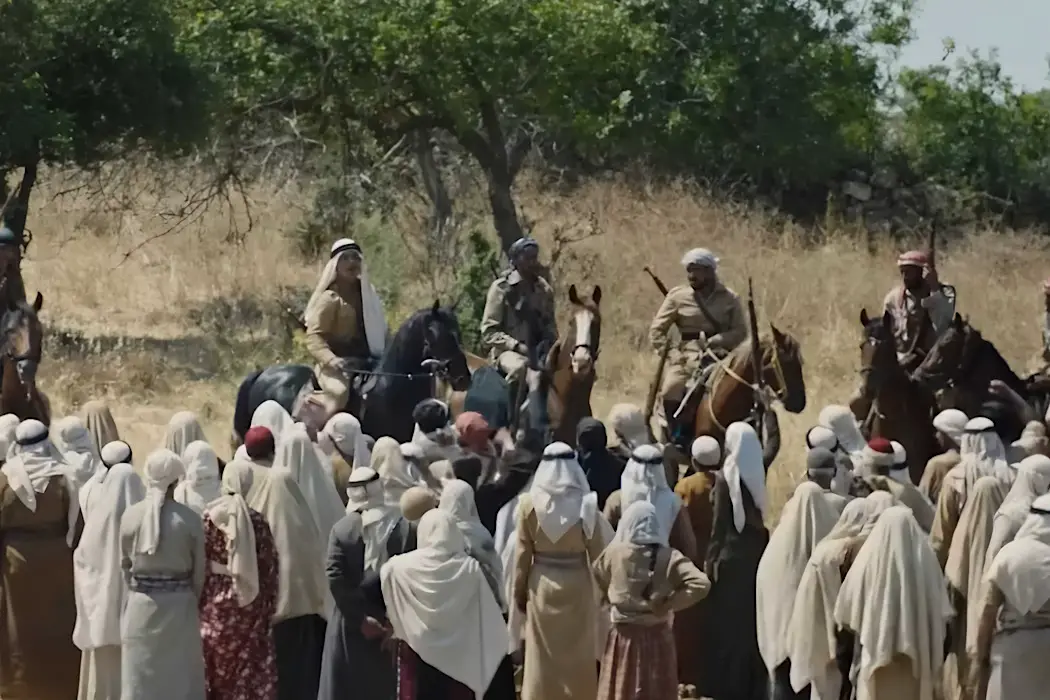

The only feature film to shoot in Palestine in the past two years, while having to stop and start production numerous times due to the ongoing genocide, Palestine ‘36 is remarkable just by virtue of existing. The fourth feature from writer-director Annemarie Jacir, the film follows a sprawling ensemble of characters across rural and urban Palestine as frustration with colonial rule, including the growing takeover of Palestinian land by Zionist settlers, eventually erupts in armed rebellion. A beautifully rendered period drama that is also painfully timely, Palestine ’36 is an important film despite its imperfections—mainly, its valiant attempts to do and say a little too much for one movie.
No Other Land
Yusuf (Karim Daoud Anaya, a Berlin-based theater actor making a memorable screen acting debut) is a young man who divides his life between the rural village he calls home and the city of Jerusalem, where he works for a wealthy businessman named Amir (Dhafer L’Abidine). Amir is active in the Muslim National Association, an organization secretly set up and funded by the Zionist Commission to provide an opposing voice to the anti-Zionist Muslim-Christian Association. The predominantly upper-class members of the Muslim National Association seek to maintain their own power and profit at the expense of the lower classes: an important reminder that capitalism walks hand in hand with imperialism, and the rich will always choose solidarity with their fellow rich over anything or anyone else. Meanwhile, Amir’s wife, Khuloud (Yasmine Al Massri), is a crusading journalist who writes articles supporting the rebellion, unaware that her husband is part of a group covertly working against what she believes in.

While Yusuf is initially convinced to join the Muslim National Association, personal tragedy and growing repression send this seemingly ordinary man and so many others like him down the road to rebellion instead. (As one character says, “With every one of us they shoot, our numbers grow.”) His story is just one of many—perhaps too many—told in Palestine ‘36, including that of a kindly Orthodox priest (Jalal Altawil) and his son (Ward Helou), a young widow (Yafa Bakri) who finds herself in possession of an antique firearm, and a dockworker (Saleh Bakri) who is denied overtime pay and inspired to join the revolt as a result. They may not have the military strength of their opponents, but they have the endurance of their people and their undying connection to the land that is their home.
Speaking Up
Naturally, the British are also present in Palestine ‘36, mainly in the form of archetypes: the good (Billy Howle’s idealistic civil servant), the bad (Robert Aramayo’s nefarious army captain), and the ineffectual (Jeremy Irons’s colonial administrator). In contrast, the Zionist settlers themselves are largely absent; they are talked about on screen far more than they talk for themselves. While this has resulted in some consternation from certain quarters, one can argue that the Zionist voice has been and is still loud enough to be heard without being inserted into this film, which exists to tell a specifically Palestinian story. You could call it one-sided, but goodness knows it’s a side that has largely been unheard until now, and deserves a chance to speak for itself on screen.
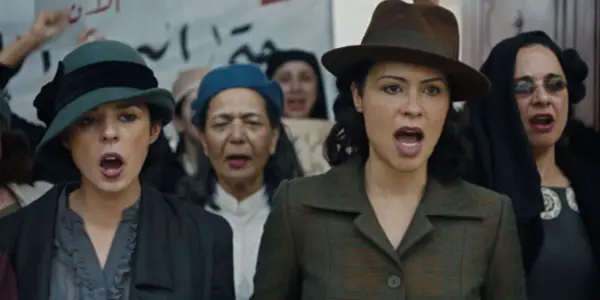
Palestine ‘36 is an ambitious production, from the incredibly detailed production design and period costumes to the lush cinematography that turns the film into a vibrant postcard from the past. (The film has three credited cinematographers: Sarah Blum, Tim Fleming, and the great Hélène Louvart, who previously worked with Jacir on her 2012 feature When I Saw You.) However, when it comes to the sheer number of characters in Palestine ‘36, that ambition is to the film’s detriment; there are too many to get to know as well as you would like, which means you don’t get to spend enough time with the ones who really stand out—mainly, Anaya’s working class striver turned unlikely revolutionary and Al Massri’s fiery female journalist. Indeed, I could have watched an entire film centered on the women who, in one particularly powerful scene, march to the British headquarters, chanting their demands while Irons cowers inside.
Notably, the film doesn’t limit its criticisms to the British Empire and the Zionist project, but also opportunists like Amir, who assume that if they give a little to the British—betraying their own people in the process—they’ll hold onto the bulk of what they have and maybe even receive a little in return. Of course, the reality is much different, epitomized by the scene in which the much-anticipated results of the Peel Commission are announced via radio, and—to the shock and disappointment of all listening—a recommendation is made to divide Palestine, setting aside land for a Jewish state and forcing the transfer of the Palestinians currently living there. The partition is justified by the statement “half a loaf is better than no bread at all,” though we know it helped launch close to a century of attempted starvation that continues to this day.
Conclusion
Palestine ‘36 is an eye-opening look at a time and place in world history that doesn’t get enough attention in the Western world, especially from this perspective.
Palestine ‘36 begins an exclusive engagement at Angelika Film Center in New York on March 20, 2026, before expanding to other markets nationwide.
Does content like this matter to you?
Become a Member and support film journalism. Unlock access to all of Film Inquiry`s great articles. Join a community of like-minded readers who are passionate about cinema - get access to our private members Network, give back to independent filmmakers, and more.
