

United States
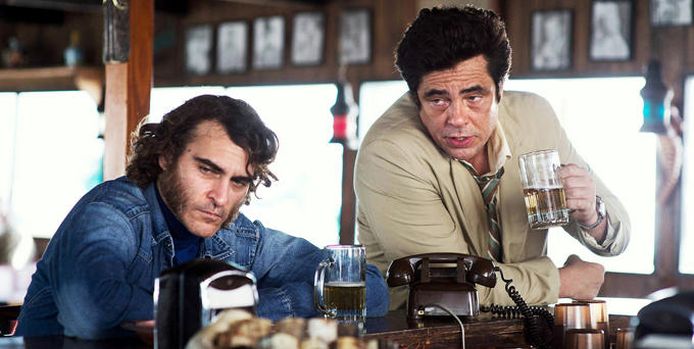
If it were not for Paul Thomas Anderson, there is a (very) good chance I wouldn’t be interested in writing about movies. It is because of his films that I take time to write for this humble little website. When I was a high school senior in 2009, my interest in movies inflated dramatically, and I watched a movie just about every night.
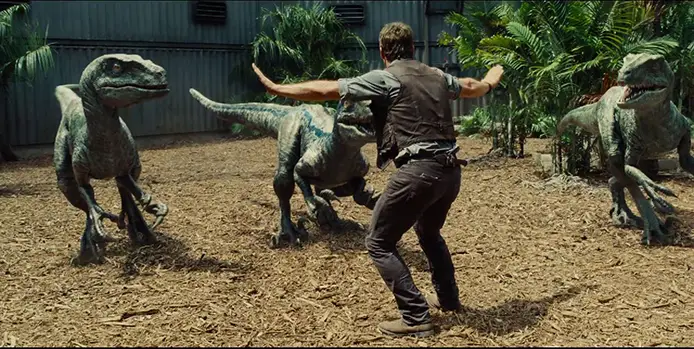
Two decades after the original Jurassic Park became the most successful film of all time at that point and ushered in the era of CGI, the blockbuster cinema landscape is very different. With Marvel Cinematic Universe, franchises six or seven sequels deep, and young-adult dystopias dominating the big releases more and more every year, original screenplays or adaptations of adult-oriented novels are struggling to make an impact – it is inconceivable that Steven Spielberg’s classic could have been released today with anything near the same level of success as in 1993. And so while the original film has a devoted fan base, few would have thought there was that much demand for a new Jurassic Park film, especially after its two increasingly inferior sequels.

After five movies and nearly two decades, you would think that the Mission: Impossible series would begin to lose its momentum. Remarkably, the series is still just as strong as ever, maybe even more so, with both Ghost Protocol and the latest, Rogue Nation now peaking as my top favorites.

The arcade was video games’ greatest legacy. In a simpler time, before gaming consoles became mobile and placed within the home, the arcade was at the heart of the world’s most ultimate video gaming experience. As an impact, the popularity of the arcade video games snowballed into the animated characters that we now see onscreen – among them the likes of Donkey Kong and Pac-Man.

Woody Allen’s perennial dialogue of death and futility is upon us, and, as someone who takes comfort in the recurring anguish of Mr. Allen’s films, I couldn’t be happier with his 2015 iteration, Irrational Man. He executes a story equivalent in scope to what has become one of the auteur’s main ambitions these fifty years:

I’ve been toiling over this review for about a week now. A large portion of mainstream film criticism has shifted towards tearing down films, blatantly nit-picking all aspects of a movie and continuously shouting nasty adjectives which seemingly constitutes as a review of a film. I get why it’s so big nowadays, being angry at or disappointed in something will always get a more humorous and memorable responses.
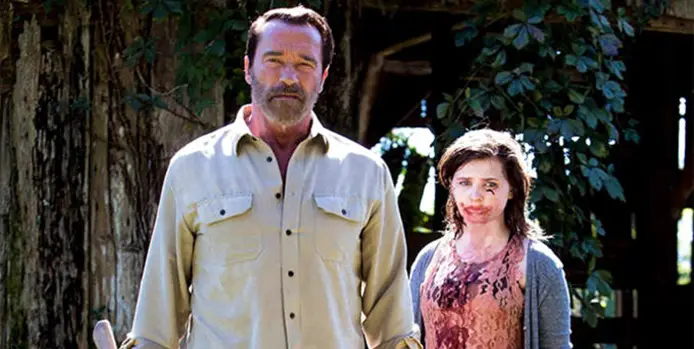
If there is ever a fitting description for Arnold Schwarzenegger’s cinematic persona, then it is this: action film hero. Time and time again, we’ve seen the ex-California Governor’s face adorning several iconic titles, portraying mere mortals (or robots in Terminator’s case) possessing near-superhuman ability, an eye for supersized weapons and a knack for crisp one-liners.

Before it had even stepped into the ring, Southpaw was dead on arrival. After all, although boxing isn’t the sport that has generated the most movies, it is the sport that has generated the most beloved cinematic classics – from Rocky and Raging Bull to the more recent likes of Million Dollar Baby and The Fighter. At the screening I attended, I was far more likely to greet it as an unwelcome entry to the boxing movie pantheon, due to the fact that the last trailer before the movie started was for Creed, the new Rocky spin-off that benefits from having Sylvester Stallone yet again reprising his most iconic role.

For as long as there have been films, there have been coming of age movies and there have been high school movies. These types of film, these genres, have become so overdone, that it becomes hard for a single film to really stand out. Dope does.

More than 150 years after the old West faded into legend, the western genre is still very much alive and well. Slow West is the feature debut of writer-director John Maclean. Although it contains some clear watermarks of a first-time director, it is also among the more unique modern westerns in the way that it plays around with traditional western tropes and conventions.
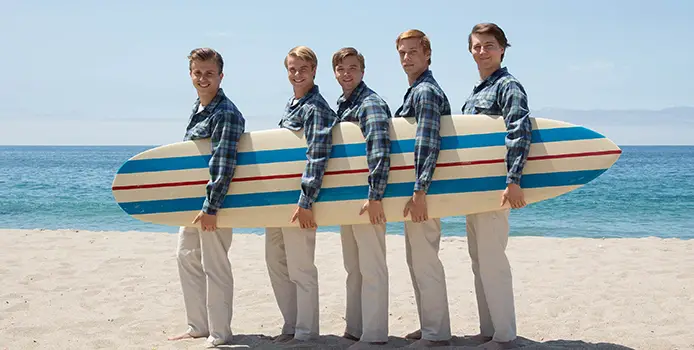
Ever since the glory days of silent cinema, Hollywood has been criticised of running out of ideas. This is why the biopic is the perfect genre for screenwriters and directors. A typical life doesn’t neatly fit into a simple three-act structure, but by highlighting an individual’s greatest successes, and framing them in a way that makes everything else inconsequential by comparison, you can turn something as uninteresting as somebody’s life into a thrilling drama.

Before watching Ant-Man, it would be safe to predict that the movie would be the film that destroys the foundations of the Marvel Cinematic Universe. This is a film that has suffered from well-publicised production troubles, leading many to question the artistic integrity of the directors the studio chooses to helm its projects, whose directorial vision has to be sacrificed in order to create another chapter in studio head Kevin Feige’s grand master plan. Production troubles sometimes lead to fantastic movies, but more often than not, they lead to gigantic box office flops – not even the seemingly unbeatable Marvel can overcome that, surely?

At the start of Andrew Bujalski’s latest film, Results, Danny (Kevin Corrigan) entreats his wife, Christine (Elizabeth Berridge), from the street below the open window of their New York apartment to let him back into the marital home. She closes the window, so he grabs its ledge in an attempt to pull himself up to and through the plate glass barrier. Danny, who carries Corrigan’s rosaceous, wan features, brittle hair, and generous paunch (sorry, Kevin), quickly drops to the ground.
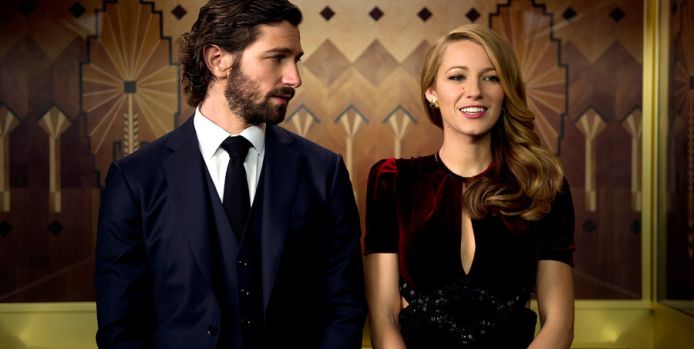
Immortality is a myth. This is a fact not only based on a reality standpoint, but also literarily. Ask anybody the first thing which crosses their minds when discussing the subject, and most likely mythical beings such as wizards, witches, vampires or superheroes would top the list.
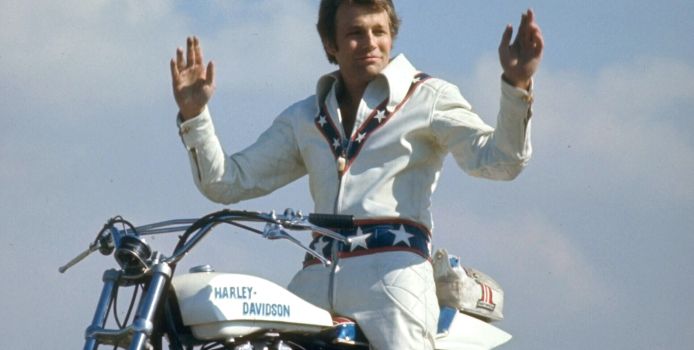
Initially, it seems that I Am Evel Knievel competently weaves archival footage with a range of talking heads. However, the documentary goes to great lengths to embellish a very unlikeable man and omits some of his life’s failings, making it an inferior production to the BBC’s Richard Hammond Meets Evel Knievel, which also has the advantage of featuring the man himself shortly before he died on November 30th 2007. During the 1970s, Evel Knievel was one of the most famous names in America and the world.