
SUNDANCE 2026: Julie Christeas on Run Amok, Sustainable Filmmaking, and Why Indie Film Still Matters

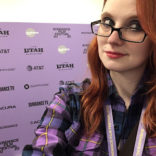
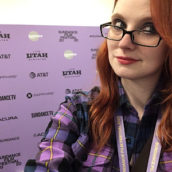
When Run Amok premieres at Sundance, it marks a milestone for producer Julie Christeas: her fourth Sundance premiere, and the final edition of the festival in Park City. As the founder of Tandem Pictures, Julie has built a producing career centered on powerful storytelling, environmental responsibility, and championing new voices. We spoke with her about Run Amok, sustainable filmmaking, and why independent film remains essential, even in uncertain times.
Building Tandem Pictures: People, Planet, Story
Julie Christeas: “I founded Tandem Pictures in 2010. From the beginning, it was a platform for people, the planet, and powerful storytelling.
Originally, I started the company to give more women opportunities behind the camera. But the second I did that, I realized how narrow that still was. Women of color, people of color, LGBTQIA folks, ageism, there’s so much exclusion. I wanted to crew up in a way that actually reflected the global audience I wanted these films to reach.
That thinking extended to the communities we were filming in. Indie films aren’t shot on studio lots; we’re in real places. After doing enough films, I’d look out at the end of the day and see forty piled‑up trash bags, day after day, week after week. I couldn’t deal with that anymore.
So I started researching what sustainable filmmaking actually looks like. And what I learned is that it is possible—across every department. Eliminating single‑use plastics, composting food waste, sourcing costumes responsibly, thinking about fuel, transportation, trailers—can anything be solar powered? All of it matters. Run Amok is a recipient of the Environmental Media Association’s Green Gold Seal Award, and the last several films I’ve made have all been Green Seal recipients. We’re really proud of that.”
Finding Run Amok + and The Last Park City
This year’s premiere is especially meaningful. “This is my fourth Sundance premiere, and it’s a wild feeling, especially being at the last Sundance in Park City. It’s bittersweet. When the lights dim, you really feel it.”
Her path to Run Amok began with writer‑director NB Mogger and a script that immediately stood apart.
“NB Mogger went to Rutgers while my husband was in grad school there, and he directed her in a play. During the COVID-19 pandemic, she created a successful web series called “COVID, I Love You.” Around that time, she sent the feature script for Run Amok to be shared with me. I read it and was completely blown away, which is hard to say when you read a lot of scripts. It was opening a doorway into a really polarizing subject in our society, but through comedy and youth. Tonally, it’s a juggernaut. I didn’t know how to lead investors to water without a proof of concept, so I asked if she could make a short. To her credit, she found a producer and an investor and made it happen. The short had a great festival run and was Oscar‑qualifying. That’s when I knew she could land the plane, and that she was the only person who could direct the feature.”
Championing New Voices
When asked what she looks for in two films, she pauses. “This is going to sound hackneyed, but I mean it from the bottom of my heart: I’m not looking for a specific genre. It’s the quality of the story and the team. A beautifully crafted script is a diamond in the rough. I don’t accept unsolicited work, but I read a lot through my community. I’m drawn to stories that speak to something in our social zeitgeist, something we have trouble talking about, and approach it from a new point of view.”
Supporting first‑time filmmakers isn’t easy, but she sees it as essential. Adds Christeas: “Then it’s about the team. Who’s involved? Can I bring value? Is this a writer I can run a marathon with? Because that’s what development really is. If independent film dies, film dies. Our next generation of Spielbergs, Scorseses and Catherine Bigelows comes from indie film. It’s hard to get these movies made. Run Amok was hard. Even with the short, it took a lot of finesse and long‑distance running—explaining why it was worth doing and how we were de‑risking it. But if you don’t take that chance, what happens? And look where we are, we’re premiering at Sundance. Tomorrow. The last Sundance in Park City.”
Despite industry anxiety, Goldstein remains optimistic. “Indie film has been facing a scary time for a long time. There are exhibition problems. Everyone’s hoping for lightning in a bottle. A streamer is buying your movie for $20 million. That’s not sustainable. But I deeply believe people want to see something they recognize about their own humanity, even if the experience feels foreign. That curiosity, that empathy: that’s the way forward.”
What She Hopes Audiences Discover in Run Amok
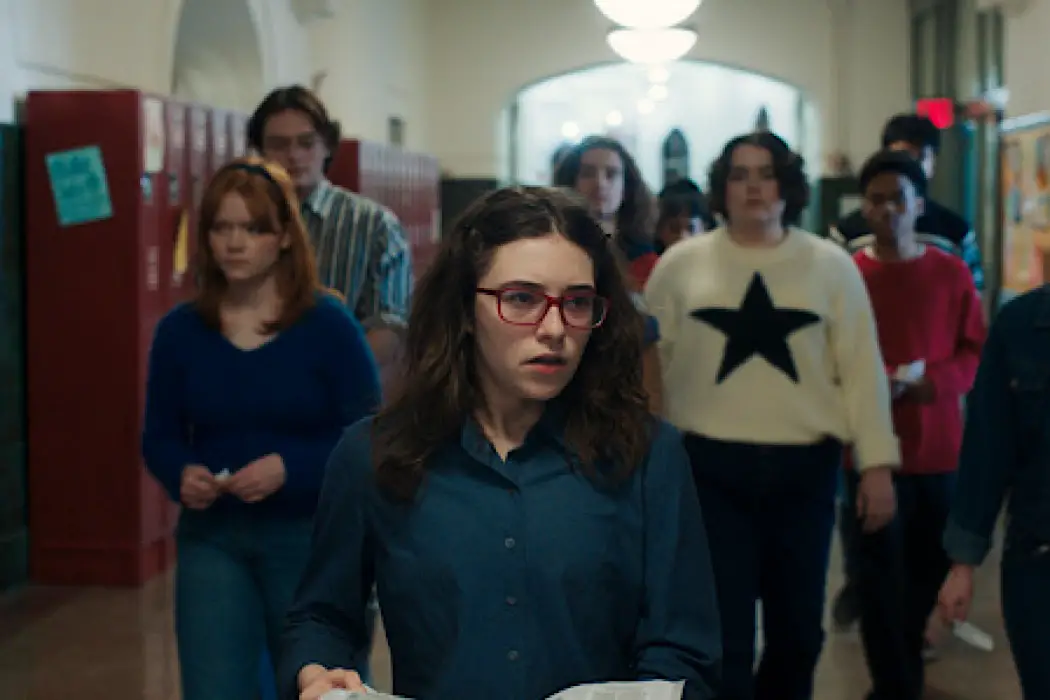
At its heart, Run Amok is a coming‑of‑age story—and a showcase for a new filmmaking voice.
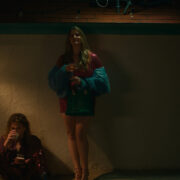
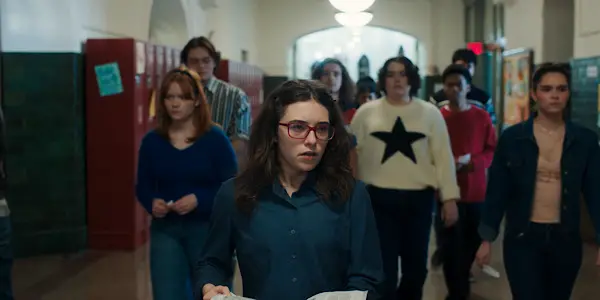
“Casting was incredible. Our band of misfit high‑school students created such real relationships. Alyssa Marvin, who came from the short, is extraordinary—people are going to have a real moment with her. Then you have Patrick Wilson, Margaret Cho, Bill Camp, Molly Ringwald, Elizabeth Marvel, and it’s an intimidating level of talent, and they’re all amazing. And what I really hope people discover is NB’s voice. Everyone says they’re looking for that breakout filmmaker—and when I read the script, I knew this was it. This is the first of many things she’ll do.”
She smiles, “Mostly, I hope people have a good time. And that it gives us space to ask each other, “What did you think?” Even getting there feels like a step in the right direction.
Film Inquiry would like to thank Julie Christeas for taking the time to speak with us.
For more information about Tandem go here.
Does content like this matter to you?
Become a Member and support film journalism. Unlock access to all of Film Inquiry`s great articles. Join a community of like-minded readers who are passionate about cinema - get access to our private members Network, give back to independent filmmakers, and more.