
Meet the Good Monsters of Good Fiend

Horror Is an Equalizing Space
The Good Monsters Behind Good Fiend
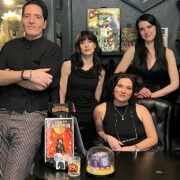
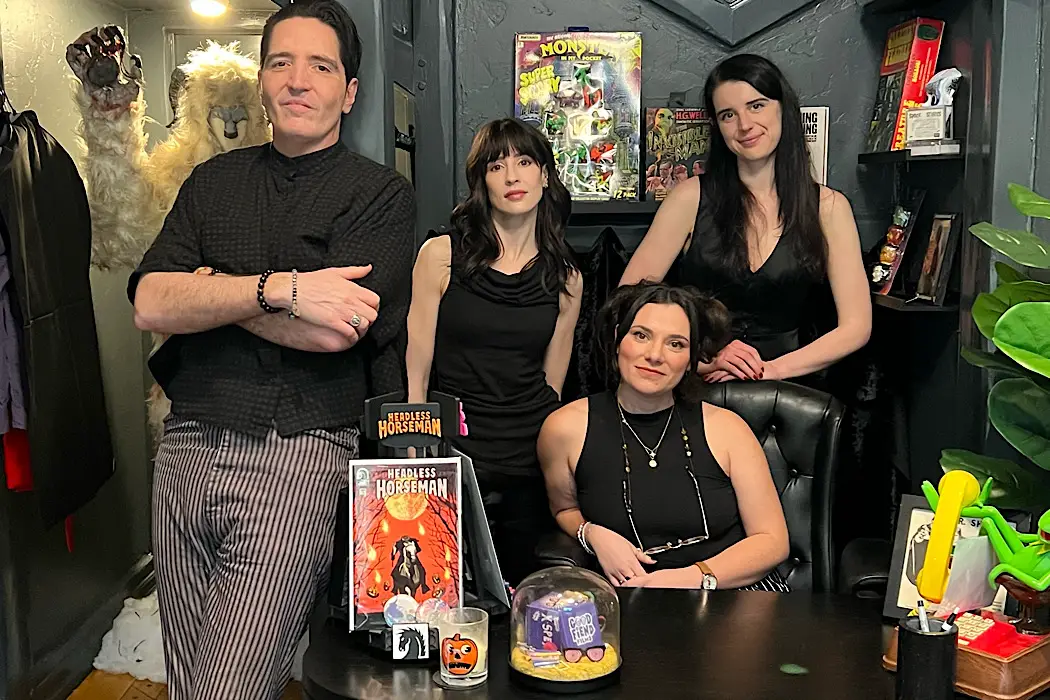
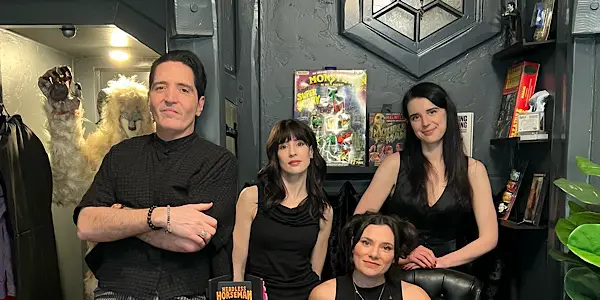
Walking into the Good Fiend Films office is comforting in the way a well‑loved horror movie is. The kind you revisit not just for the scares, but for the feeling it gives you. Old horror films hum in the background. A carefully reconstructed Yeti watches over the room like a silent mascot. This isn’t just décor; it’s a reflection of the stories Good Fiend Films is committed to telling, by building empathy-forward genre across film/TV/comics.
Spending time here makes it immediately clear that Good Fiend isn’t just defined by its projects, but by the people behind them. And this group is rad as hell.
Good Fiend Films officially launched in 2022, but as founder David Dastmalchian explains, the last two years are when the company truly found its stride. “I’d always dreamed of having a production company,” Dastmalchian says. “But over time, that dream became much more specific. I wanted a place where we could take our love of genre—horror, sci‑fi, fantasy—and tell stories that really mattered to us.”
That specificity is the backbone of Good Fiend: genre stories rooted in empathy, humanity, and contradiction. Stories about monsters, especially the good ones. The key? Building a badass team. Enter: the coven.
The Coven
Good Fiend Films doesn’t operate like a factory. It operates like a collective, one built on long‑standing creative relationships and mutual respect.
Executive Creative Director Leah Kilpatrick has known Dastmalchian for nearly twenty years, first collaborating with him on short films before reuniting creatively through writing and publishing.
“We’re fascinated by how society labels monsters,” Kilpatrick says. “Often, the things we call monsters are misunderstood. Humans tend to be the real monsters, and genre gives us a safe way to explore that.”
That idea resonates across the team.
Natasha Preston, Executive Assistant, describes Good Fiend’s mission as one rooted in compassion:
“There are good monsters and bad monsters in the world. What we’re interested in is finding the good, especially in dark places.”
And then there’s Jennie Iacobino, Supervising Producer, who joined the company without a background in horror.
“I hadn’t really seen many horror films before,” Iacobino admits. “I joked that when I first started with David, I was probably the least qualified person, because not only was I not familiar with his extensive work, but the entire genre was lost on me. I hadn’t really seen many horror movies in my life, so I started watching them because I’d be reading scripts and thinking, ‘I think this is an okay script, but I don’t know what’s good in this genre, what are the markers of this genre?’ It started with being better at my job, trying to understand the genre, and now the list is just ongoing. I find ways to categorize so that I don’t lose my mind—like, is this going to be the Vincent Price month, the ’70s month, the slasher month, and I just make my way through that way. That’s fun. As for favorites, it’s hard to categorize because there’s a recent favorite, the one I found scariest, the one I screamed the most in. I definitely think Barbarian is the movie I’ve screamed the loudest in—it’s the scariest one for me. And then, for a classic, The Exorcist.”
Spoken like a true horror nerd.
Her journey mirrors something central to Good Fiend’s ethos: horror as an invitation, not a gate.
Dastmalchian elaborates: “I became really endeared to this idea of a place—an organization, a company—where we could take our love of all things genre: science fiction, horror, superheroes, and fantasy, and tell stories that really matter to us, that resonate with our hearts and our minds, and challenge ideas and questions that we think are important, all within that space. It’s continuing to take shape. It started with Count Crowley as one of the flagship things. This is a good monster story, set in a world populated by all kinds of monsters: good monsters, bad monsters, monsters who are both good and bad, because I think that’s what the world is like. I kept realizing how much my own personal baggage—history, struggles, victories—could impact the shape of the stories. Then the producing partners started to come together. I’ve known Leah since making short films, meeting in Chicago almost twenty years ago, so we started collaborating and writing together. Then it became clear to me that Jenny needed to step up in a way that wasn’t just assistant-level—I needed someone supervising and really helping produce, keeping everything on track and organized. She moved up, Natasha joined, and it all continued to grow.”
We the Monsters
Good Fiend develops projects across film, television, comics, and digital media, but the guiding question remains the same: Who is this story really about?
“It’s easy to root for a traditional hero,” Iacobino says. “What’s harder, and more interesting, is learning to empathize with someone awkward, rude, or difficult to love, and creating space to admire parts of them feels essential to Good Fiend.”
That philosophy is on full display in Late Night with the Devil, Good Fiend’s first feature co‑production, a film that uses supernatural horror to explore ambition, addiction, and moral compromise. (Check out one of our reviews for the film here).
At the center, it really comes down to empathy.
Iacobino continues, “Most of the stories that come through Good Fiend cross my desk at some point, and what always attracts me is taking the good monster element so we’re not pigeonholed into just creature features. It’s about who the people are in the story and why they don’t fit into their world. When you read a script or watch a movie and get an inside look at a character’s life: their struggles, their goals, what they want, you can find empathy for almost anyone.”
“The monster isn’t the demon,” Kilpatrick notes. “It’s the man. I think one thing that I’ve always found really fun in our storytelling, and that Dave and I talk about when we write our comics specifically, is how society has labeled monsters. The irony of it all is that aesthetically they look scary or deformed or different or ugly to people, and I think they’re labeled that way because people see themselves in them. Humans are really the true monsters, and the things we label as monsters are often the ones that are misunderstood.”
For Dastmalchian, that distinction is essential. “I don’t think everybody has been a bad monster, but I think everybody thinks they have. I’ve certainly been a bad monster and a good monster. I’m a recovered addict who’s lived in darkness, and I love redemptive tales—seeing people up against the ropes,” he says. “I love redemptive stories. I love watching people struggle, fall, and try to find their way back.”
Kilpatrick adds, “I love using monsters as a way to let people identify safely, to live out, even if it’s a fantasy of getting justice through a safe haven, which ironically is sometimes a monster. I’m very interested in how they became that way; that’s a big part of what I like to discover. Everyone has a story, and there’s a very fine line between how easy it can be to turn to the dark side of being a monster. That line is really where I like to write.”
The support system in place is constantly on display as Dastmalchian smirks and adds, “Fuck yeah!” He continues on the mythos of monsters in the world, “In horror, in genre, we can flip expectations on their head. The Accessories is about people who’ve done really bad things, grave robbing, abuse, aiding and abetting murder, and yet they’re still seeking freedom or redemption. I want everyone to feel like they have a place at the table when they experience a Good Fiend story. Horror is an equalizing space: people might be distracted by the blood or the gore, or they might just spill their popcorn, but either way, we want them to have a good time.”
Publishing plays a significant role in Good Fiend’s creative output, offering a space to develop original IP with care and depth. Projects like Count Crowley, Knights vs. Samurai, and the upcoming The Accessories allow the team to explore characters over time, often laying the groundwork for future screen adaptations.
“Comics give us time,” Dastmalchian says. “Time to know these characters deeply. By the time the book is done, they feel real—and you can see how they’d live in other mediums. To stretch, explore, and really hone in on themes and characters. Writing a script, describing action and character, then seeing artists respond to that work creates layers of conversation.”
Kilpatrick agrees, noting how collaborative the medium is. “You’re constantly in conversation with artists, editors, and each other. The story keeps evolving.”
Dastmalchian adds, “Yes, and by the time the book is finished, you truly know these characters, and it’s hard not to imagine what a kick‑ass show The Accessories could become.”
Good Fiend Films is taking on the storm of creativity across many ventures. Dastmalchian says, “We work across features, TV, and comics, multiple mediums, but the stories either come from in‑house, from inside one of our brains, or they come from friends and collaborators. Those projects are co‑productions. Most of the comics now, and going forward, are in‑house, while features and TV usually come from conversations with outside creators that we feel fit under our umbrella, so we bring them in and work on them. Grave Conversations is a good example: it started as a small, temporary collaboration and grew into something bigger.”
Grave Conversation (a unique YouTube and Spotify interview series hosted by David) is a genius idea, has him interviewing celebrities, talking in the most intimate of settings: lying in open caskets. The series has had some amazing guests, and the conversations are always engaging, thoughtful, and memorable.
With new projects, Dastmalchian speaks to the importance of the in-house creative support system. “Jennie’s developing a feature right now, we’ve got a couple of pilots, and we’re developing another feature. Natasha’s a writer as well, she’s written a very kick‑ass horror feature—so who knows, maybe that’ll be a Good Fiend thing too. And along with being an epic horror aficionado and writer, Leah is an amazing makeup artist.”
A Community Alike
There’s a recurring idea that horror is inclusive, communal, and unifying rather than alienating. Dastmalchian discusses how horror can distract audiences with gore or spectacle while quietly taking them on an emotional journey.
Preston speaks to what she wants to see on screen and the importance of that empathy. “I think a lot about what the mission speaks to in terms of who the good monsters are in the world. Especially in today’s day and age, it feels important to say that there are good monsters. It can seem like there are a lot of bad monsters right now, but there are good ones. A lot of the stories we tell lead the genre space through empathy, which is why we look at good monsters—why we’re interested in looking at where the good exists in darkness. That’s why it’s so important to lead with empathy in our storytelling. For me personally, that’s why I’m extremely proud to work here and honored to support it, because that’s how I like to lead my life, and those are the stories I want to see on the screen.”
When posed the question about the future and the dreams they are hoping for (other than a bigger office), Dastmalchian visually swoons when answering, “My biggest dream is that when someone sees the Good Fiend logo, before a film, a TV project, or on a book or poster—they lean forward and feel that excitement, that warm, fuzzy feeling I’ve always had seeing logos like Warner Bros., Universal, Amblin, or Bad Robot. You associate those symbols with a space you’re excited to enter. I want the characters we’ve been developing to connect with the widest audience possible, and I want the ideas I’ve been dreaming about to manifest in film, television, and publishing. I also love being part of other people’s work, helping it rise from the slab.”
They are the real deal, immensely talented, and are also hilarious. At one point, David takes the reins and asks his team questions like an old-timey reporter asking his team what they want for the future, adding, “if it’s better pay, say it now!”
After the shared laughter, Iacobino agrees, “I want people to put on a movie they might not know much about—maybe they just read a logline and liked the lead actor—and then see the Good Fiend logo and think, ‘Oh, this is going to be good.’ I want to be tied to that kind of legacy.”
And it all comes back to the community. We support our own.
Preston adds, “I’d love to plug our social media (@GoodFiendOfficial on Instagram) and loop that into our goals for the future. Something I’ve really loved is our fan base. This past December we did a Holiday of Horrors giveaway, and I asked people to create a scary holiday story. What was so heartwarming was not just the submissions, but seeing people comment on and support each other’s videos. They came from all over the world, and that’s what I’m most excited to see going forward: the community we’re building and the way people are connecting across the world.”
Coming into horror from the outside, Iacobino admits she was surprised by what she found. “People can look scary or intimidating,” she says, “but they’re incredibly warm and welcoming.” Not a self-described tough person,“I scream at everything,” she laughs. She found the genre to be unexpectedly open.
That generosity, she explains, is what sets horror apart. “If you say you haven’t seen something, no one shames you. They’re excited to share it.”
The reaction resonates immediately with us all. For her, that impulse, to share, to invite people in, is the heart of it. “Horror”, she says, “is the one genre where fans genuinely want you to experience what they love, a level of welcome that speaks volumes about the community itself.”
Very well said, and I’d expect nothing more. Back in the Good Fiend office, as old horror films continue to hum and the Yeti keeps silent watch, that sense of welcome lingers. It’s a reminder that in the right hands, monsters aren’t meant to scare us away, but to bring us closer.
Film Inquiry and this fellow Monster Child would like to thank the amazing Good Fiend team for taking the time to chat.
Does content like this matter to you?
Become a Member and support film journalism. Unlock access to all of Film Inquiry`s great articles. Join a community of like-minded readers who are passionate about cinema - get access to our private members Network, give back to independent filmmakers, and more.