










The Mandalorian and Grogu is Old-school Fun and Adventure


Comic books will often release an issue for a long-running character with a disclaimer on the cover advertising it as a “jumping-on point”. This means it might be the 200th issue of a character, but the story itself will restate the character’s origins or tell a self-contained story, unrelated to decades of already established continuity.
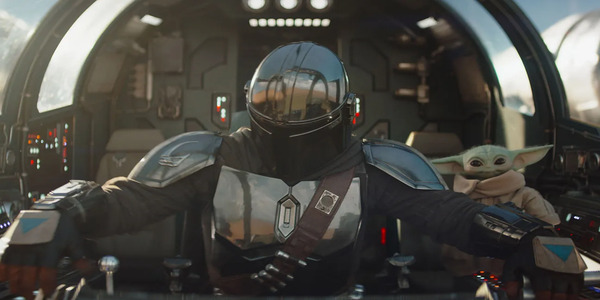
The Mandalorian and Grogu is a Star Wars jumping-on point. This might seem strange considering that it is the movie follow-up to three and a half (I’m counting The Book of Boba Fett appearances) seasons of television, but if you were expecting appearances from The Armourer, Bo Katan, or, in fact, any other Mandalorian, you will be left wanting.
A Cautious Tale
When The Force Awakens came out in 2015, it was the first new live-action Star Wars since 2005’s Revenge of the Sith. Now, while Revenge of the Sith is the best prequel, it is still one of the prequel trilogy, a period of Star Wars that, while it is getting a lot of love these days, was considered a punchline for a long time.
After Disney acquired the franchise, the hype for a new movie was off the charts, and the pressure to not deliver another The Phantom Menace felt front and centre. An Empire magazine spread about the making of The Force Awakens featured jokes about including Jar Jar Binks’ skeleton in the back of one shot, which shows they had killing the prequels front of mind when bringing Star Wars back to the cinema.
I’ll admit my own trepidation when I was seated opening night and “A long time ago, in a galaxy far, far away” appeared on the screen. A new era of Star Wars was potentially about to begin, but if the movie I was about to watch was terrible, it would be dead before it had a chance. What might be strange, considering how big a complaint it is about the movie, is that my trepidation vanished as soon as Poe Dameron put the crucial McGuffin data into his droid, which then got lost on a desert planet, à la A New Hope.
It was clear then the filmmakers were being as cautious as possible and basically announcing that “Hey, we know how to make a Star War. Everything is in safe hands.” And don’t get me wrong, the movie had its own personality even if the major plot beats felt cribbed from A New Hope, but I found myself thinking of Rocky, Rocky Balboa, and Creed. They’re all excellent movies and all basically the same movie with a little extra spice here and there to personalise them enough that it doesn’t feel like, for example, Home Alone and Home Alone 2, i.e. the same movie twice.
The Mandalorian and Grogu is not a retread of a previous Star Wars movie, and it also isn’t a season of The Mandalorian crammed into two hours. What it is, is something quite old school and quaint in this day and age: a 2-hour and change adventure movie that doesn’t sequel-bait, doesn’t announce the beginning of a new franchise, and doesn’t hammer you with fan service cameos or winks to the camera.
Like The Force Awakens, it is attempting to get Star Wars back on the big screen so it is an unalienating as possible to viewers who perhaps haven’t watched all 24 episodes of The Mandalorian and only know about Baby Yoda from memes or soft toys.
It can’t be called self-contained because it only exists because of George Lucas’s Star Wars. Still, if you had never seen the nearly 50 years of Star Wars content that preceded it, you could walk into a theatre off the street and watch it with minimal questions left unanswered.
The Growth of Grogu
The Onion ran a headline recently that read “Report: Decision Not To Call Film ‘The Baby Yoda Movie’ To Cost Disney $900 Million”, and as funny as it is, I’m not sure how wrong they are, as Baby Yoda, aka Grogu, has not stopped being a major drawcard for new viewers since his debut in 2019.
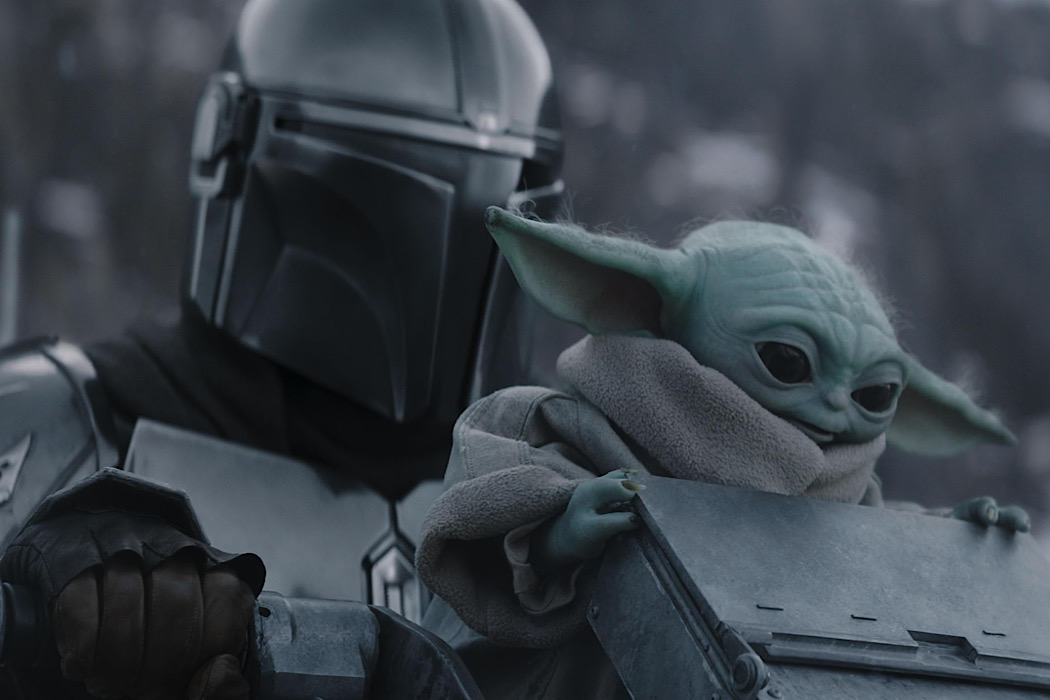
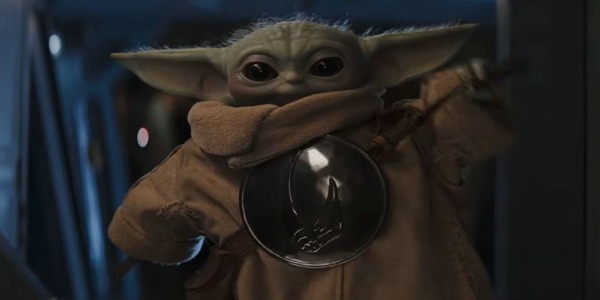
Putting him front and centre on the movie’s poster, marketing, and its title is definitely going to get bums on seats, but what the movie does so well is justify how much they’ve front-loaded the little green cutie pie. He has tons of little moments to shine, whether using the force to disable a droid, his constant eating, or his big hero showcase in the back half of the film, where he is the only character on screen for a long period and manages to completely hold the movie in his tiny green hand.
However, if you’re coming to this movie to learn more about our leads, you’re not getting it. The Mandalorian is never even referred to by his real name in the movie, nor is Grogu called the full name he received during the season 3 finale. Much like this is not a story about Din Djarin and his past as a foundling and the future of the displaced Mandalorians (huge plot points in the TV series), this is not a movie about Grogu’s time before meeting the Mandalorian, nor is it about his brief training stint with Luke Skywalker.
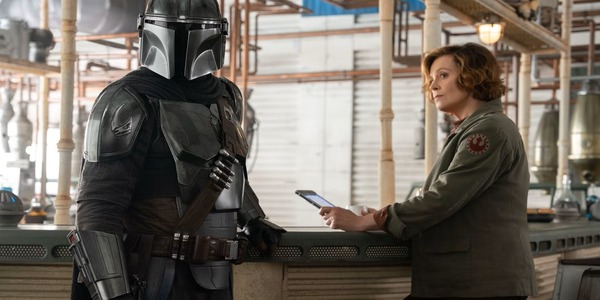
Jon Favreau and his two co-writers, Dave Filoni (who has a cameo) and Noah Kloor (who doesn’t), steer away from anything that might require any deeper homework than just seeing the poster on your way into the movie.
I’m serious about that, by the way. Bring up an image of the poster, find someone who doesn’t know anything about Star Wars and ask them what they think the movie is about. If they say they think it’s about the guy in the armour and the little green dude engaging in derring-do in space, they would be right.
This is all complimentary, I might add, as it means The Mandalorian and Grogu is a refreshing movie set within a franchise world in that it simply exists between its beginning and end. Yes, there will be more stories with these characters, but they aren’t hinted at during this one. There isn’t a shadowy figure who emerges during the end credits to make a cryptic comment about adventures we’ve yet to see.
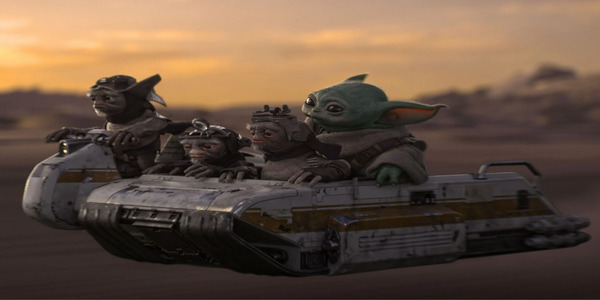
It is just two hours of action set-pieces, humour, and the cutest team-up ever between Grogu and four Babu Friks (Yes, I know they’re Anzellans) who threaten to steal the movie away from the rest of the characters with some perfect one-liners and puppet-based physical comedy.
Conclusion:
I realise, as I wrap this up, that I didn’t even give out a hint of the plot, but it’s not that kind of movie. The plot is solid but slight. It’s nothing revolutionary, though there are some wonderfully weird moments throughout.
References to Gladiator, The French Connection, 30s gangster movies, and Apocalypse Now intersect with space battles and a talking alligator man. Favreau captures some beautiful shots, especially during a slower sequence of Grogu taking care of the Mandalorian in the jungle, and the action is clean and creative.
The puppet and stop-motion work on Grogu and the Anzellans is top-notch, and you would be hard-pressed sometimes to pick out whether it’s CGI or a physical puppet in the scene. Not so with Rotta the Hutt, who is always a hulking CGI slug but, voiced by Jeremy Allen White, forms the emotional centre of the movie, which is not something I could have possibly imagined.
Overall, The Mandalorian and Grogu is a burger and fries type of movie. It’s nothing too posh, nothing too junky, but you’re filled up by it, and you enjoy every bite.
Does content like this matter to you?
Become a Member and support film journalism. Unlock access to all of Film Inquiry`s great articles. Join a community of like-minded readers who are passionate about cinema - get access to our private members Network, give back to independent filmmakers, and more.
